Blog

Scraping product reviews: build a feedback dataset

November 02, 2026

e-commerce data, Product reviews, data quality, web scraping, dataset design
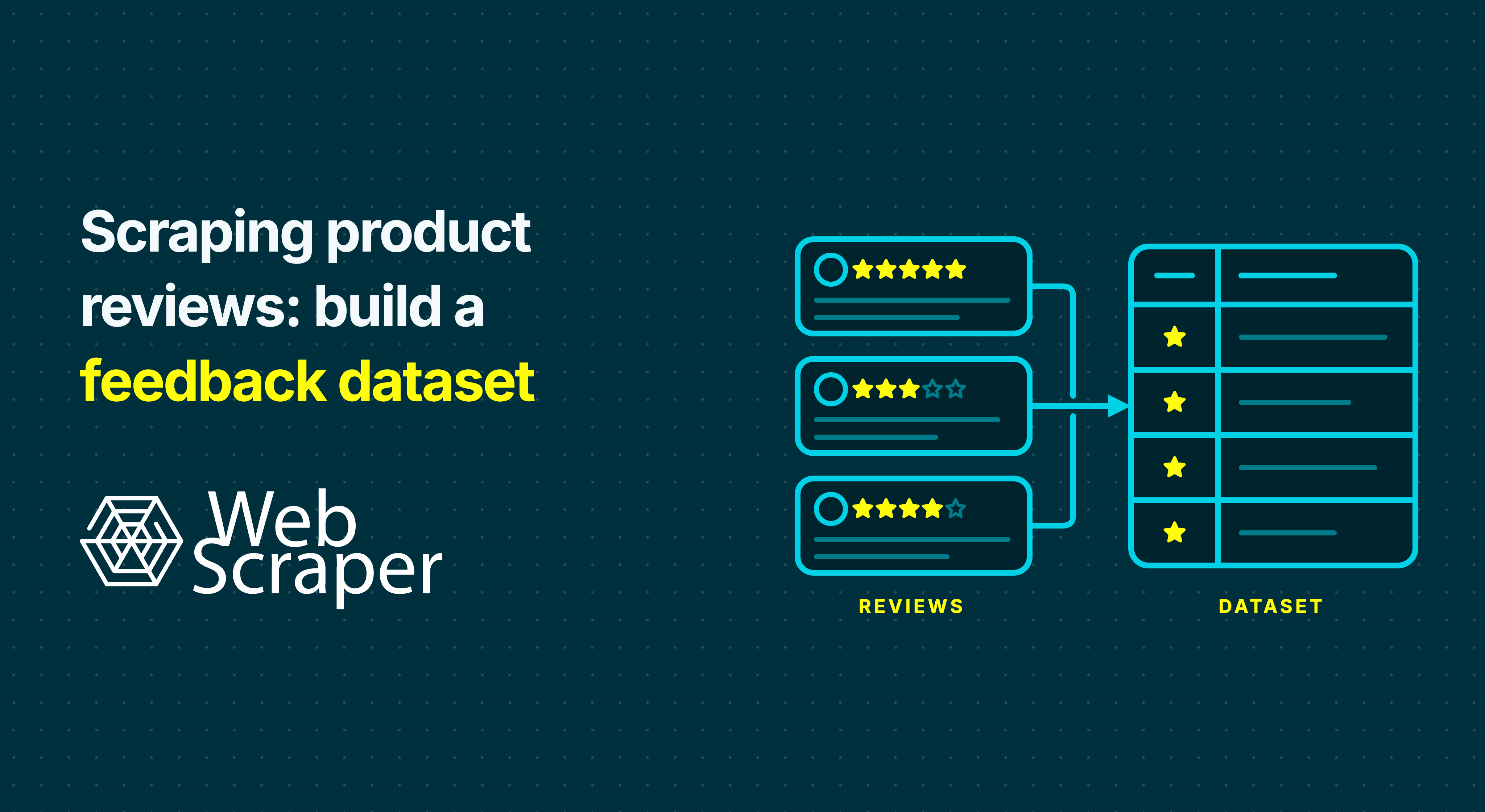
Scraping product reviews gives you useful customer feedback when each review retains its product identity, source, publication date and collection context. Text and star ratings alone cannot tell you whether a complaint is new, duplicated across retailers or about a different variant.

Define the records and coverage before building the scraper, so recurring exports can preserve changes without counting the same feedback repeatedly.

Continue Reading

Why can't your scraper see content inside an iframe

November 01, 2026

web scraping troubleshooting, data quality, browser automation, CSS selectors, Iframe scraping
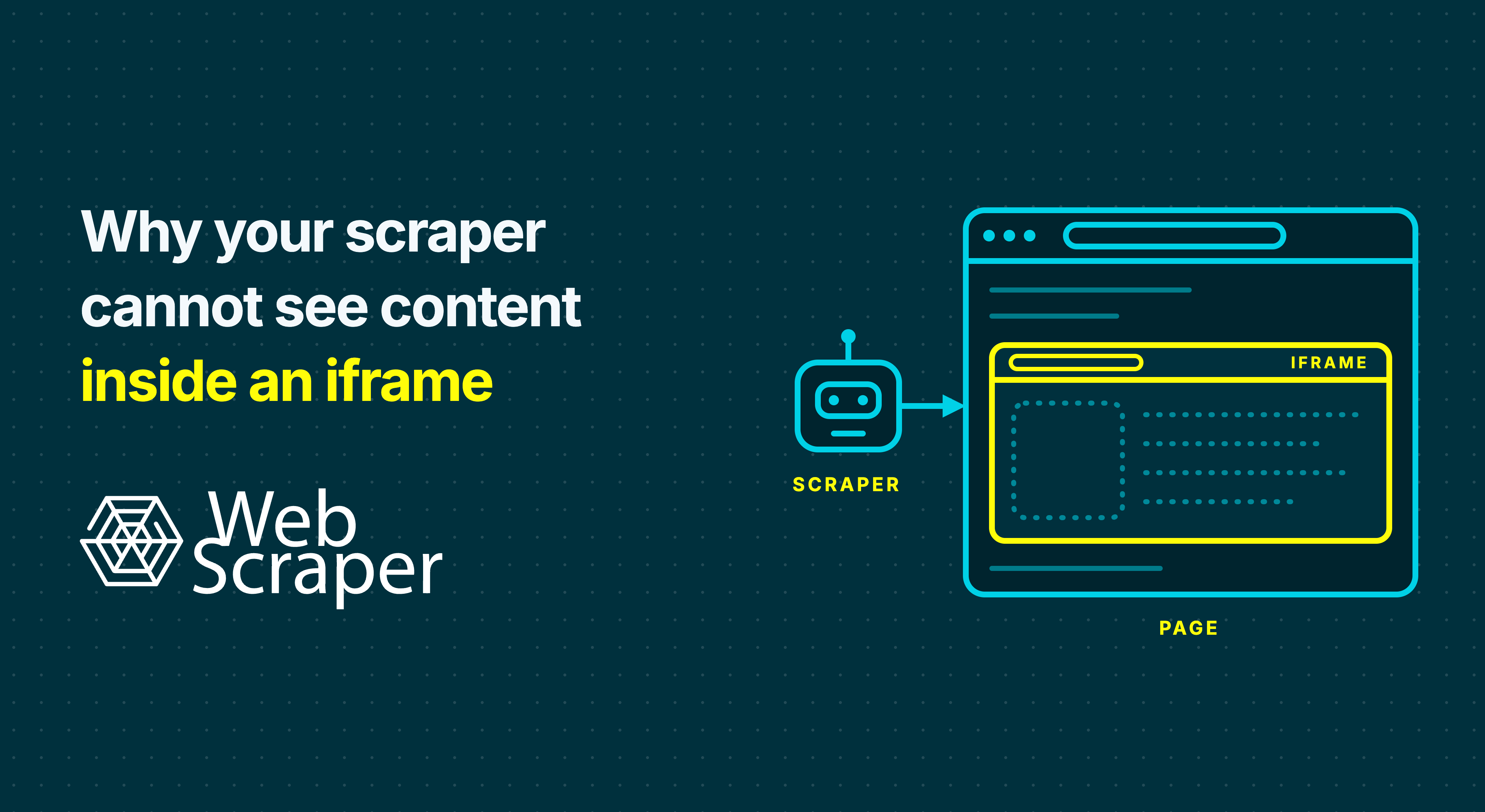
An iframe displays another document inside the page you are viewing. Your browser can show its content while a scraper searching only the surrounding document finds nothing. To scrape iframe content, identify the frame, check whether its data is ready and accessible, and choose an extraction route your tool supports.

Continue Reading

Robots.txt AI training opt-out: what the proposal changes

November 01, 2026

data governance, robots.txt, crawler controls, web scraping, AI training
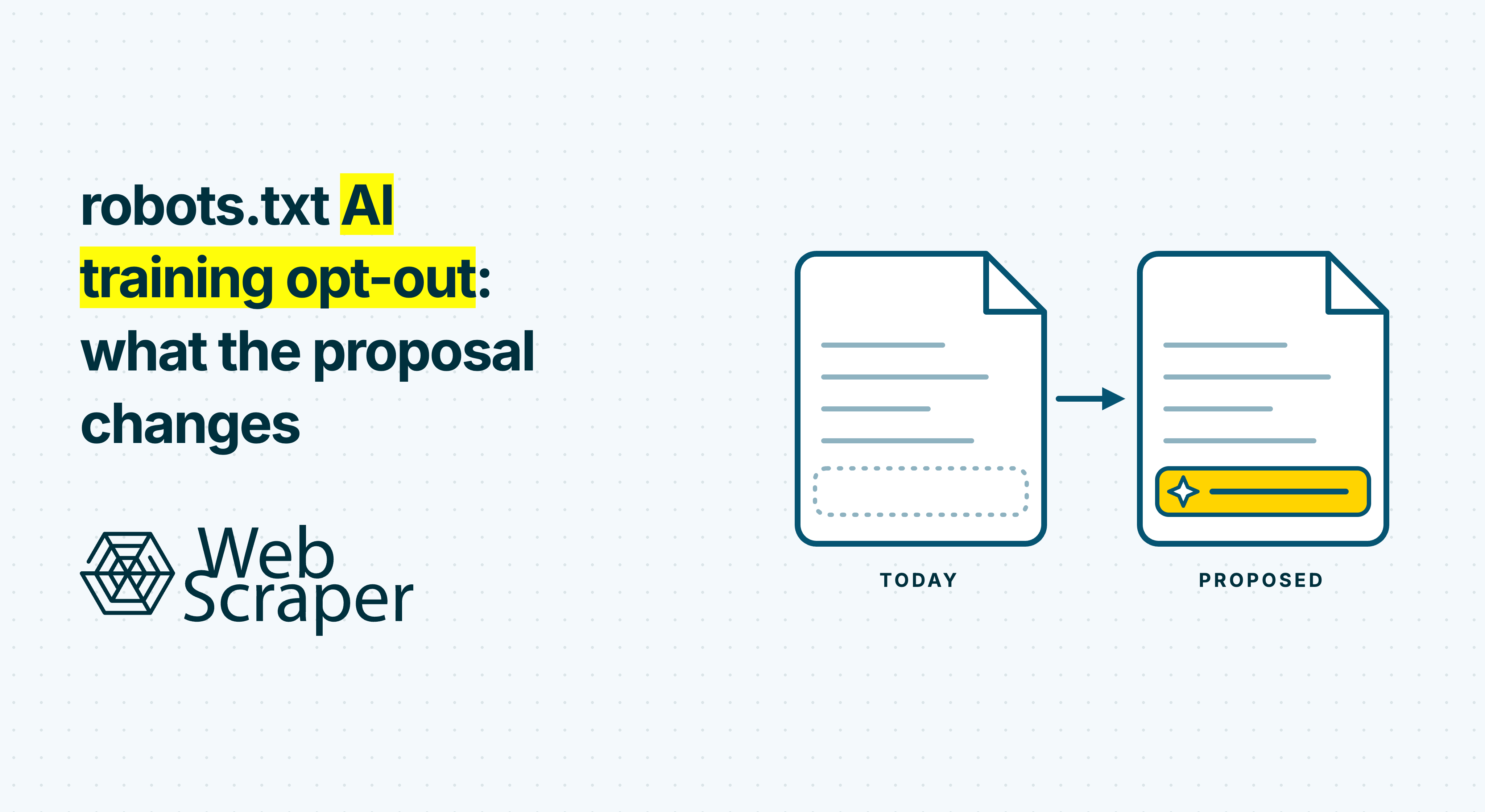
A proposal published on 30 October 2026 would let websites express an AI-training preference to several providers through one shared robots.txt group. That could reduce the work of maintaining a separate opt-out for every company.

The mechanism remains an individual Internet-Draft. Providers have announced different rollout schedules, with different consequences for training and AI answers. Website owners should review those differences before replacing controls they currently rely on.

Continue Reading

AI browser traffic jumped 4.7×. What does that mean for web scraping?

October 29, 2026

crawler identity, bot detection, AI agents, AI browser traffic, web scraping
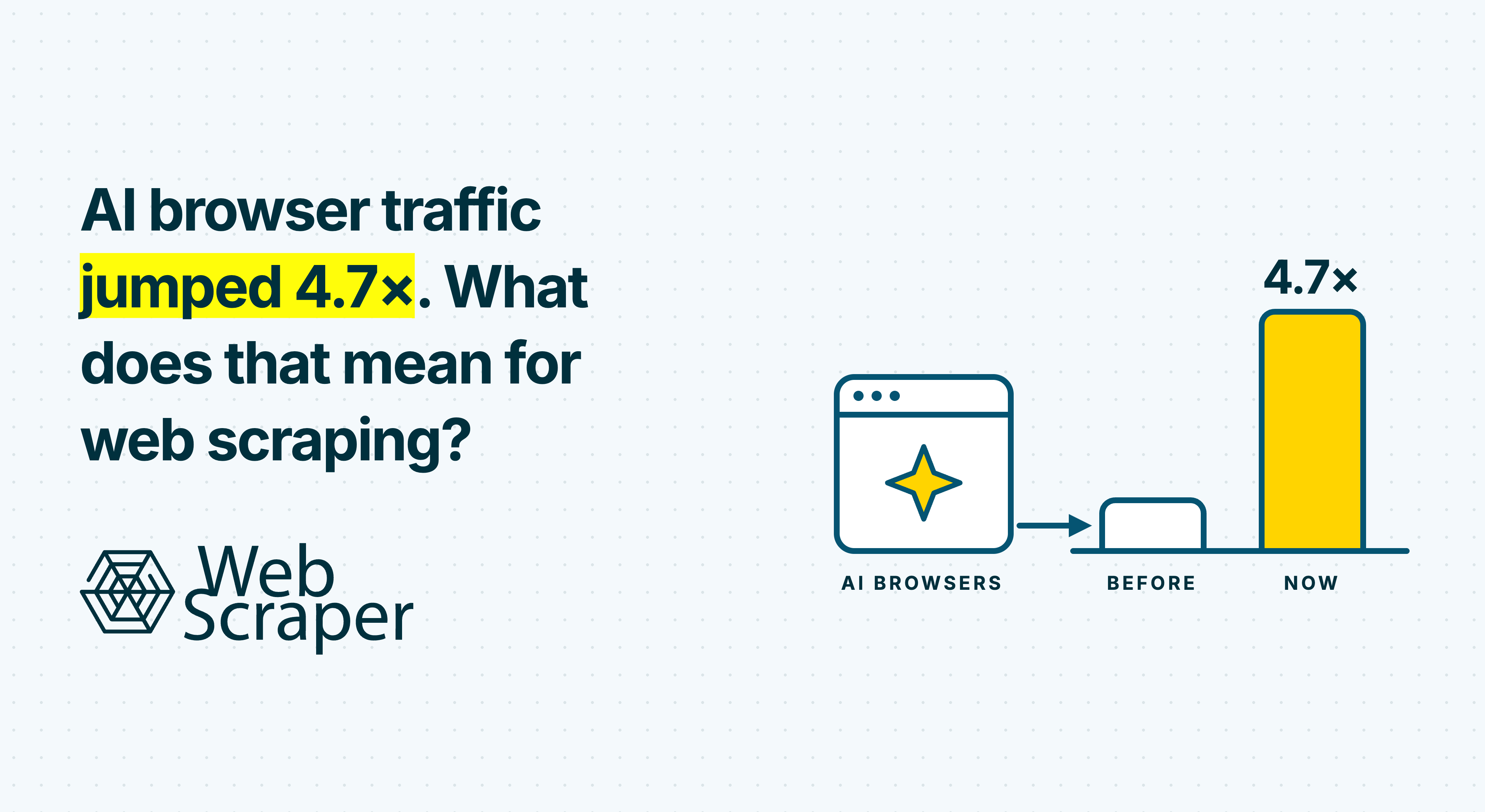
DataDome’s report published on 15 October 2026 recorded a 4.7× rise in agentic browser requests across its network in September.

For web scraping teams, this raises a practical question: how does a website distinguish an assistant checking a product from a search crawler indexing it or a company collecting its price every morning? Those activities can overlap. Sites need evidence about the operator and its behaviour, then a policy for the requested activity.

Continue Reading

Why your scraper sees different prices than your browser

October 28, 2026

price monitoring, e-commerce data, data quality, scraping troubleshooting, browser state
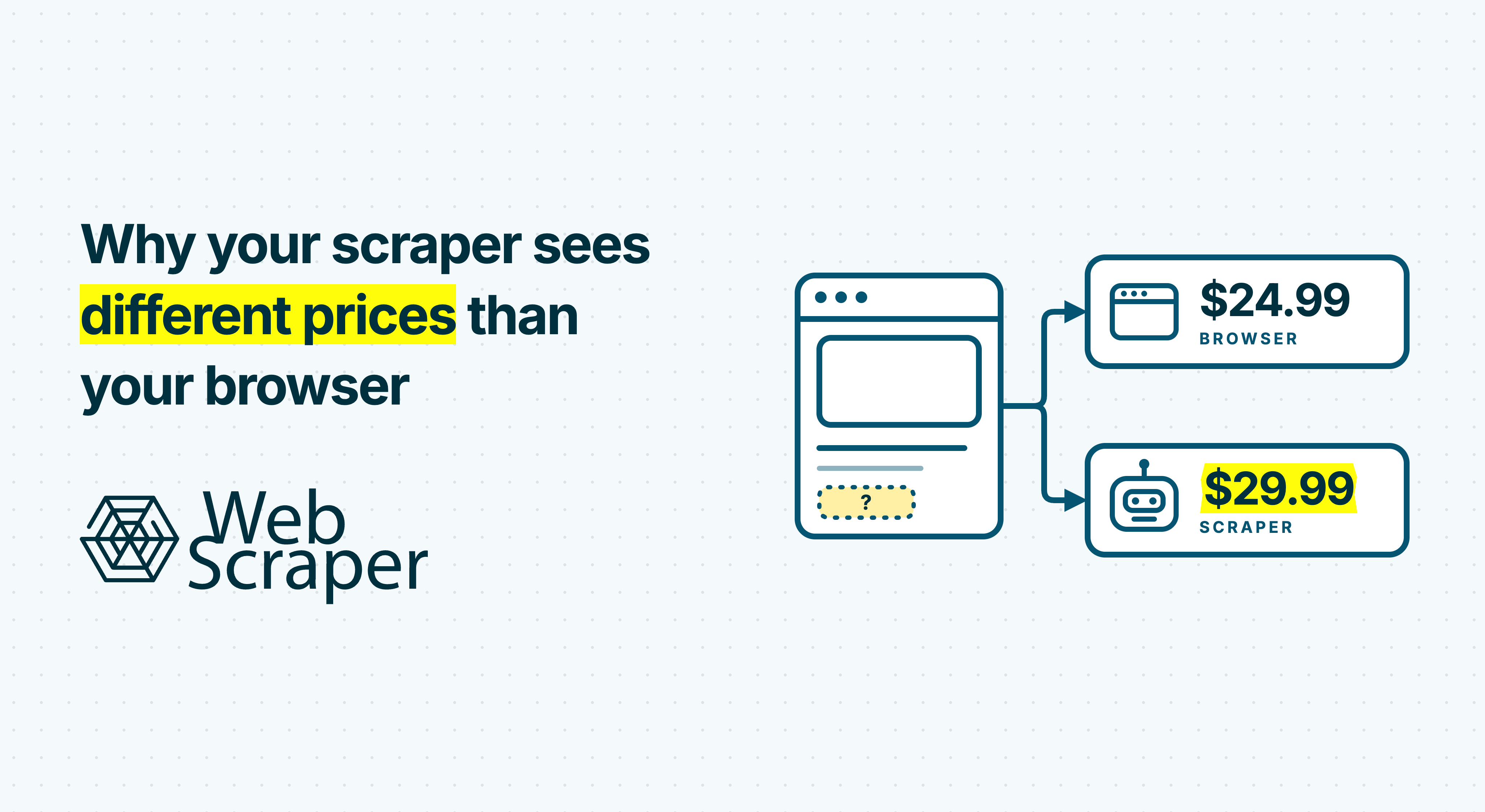
Your scraper can return a different price because it receives a different offer, extracts the wrong price from the page, or changes a correct value during processing. Location, saved preferences, login state and selected variants can all affect the comparison.

Start with one mismatched product and find where the two results first diverge. That tells you what to fix before you change proxies, selectors or delays across an entire catalogue.

Continue Reading

Reddit login restrictions: when search sends fewer readers

October 27, 2026

Reddit, Data licensing, AI search, Search referrals, Public web data
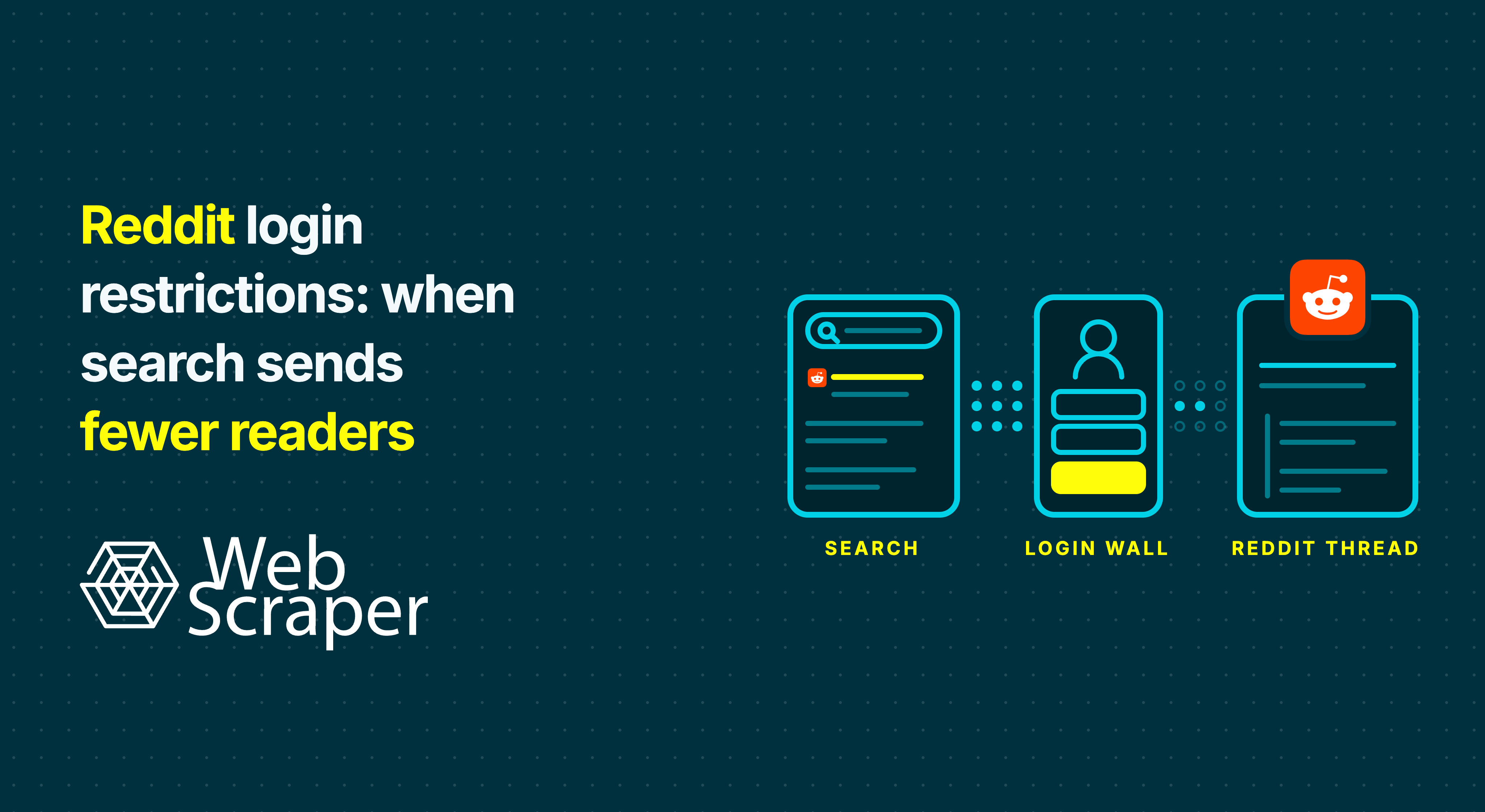
Reddit plans to test login restrictions in selected markets outside the US in Q4 2026. Announced on 29 October 2026, the move comes as the platform reports falling search referrals and tries to turn more visitors into regular, signed-in users.

For teams collecting public web data, the wider risk is that fewer referral visits could give websites another reason to restrict access. Content can remain useful to an AI search service even when fewer readers visit its source.

Continue Reading

405 errors in web scraping: why your browser works

October 27, 2026

web scraping troubleshooting, Web Scraper Cloud, bot challenges, browser sessions, HTTP errors
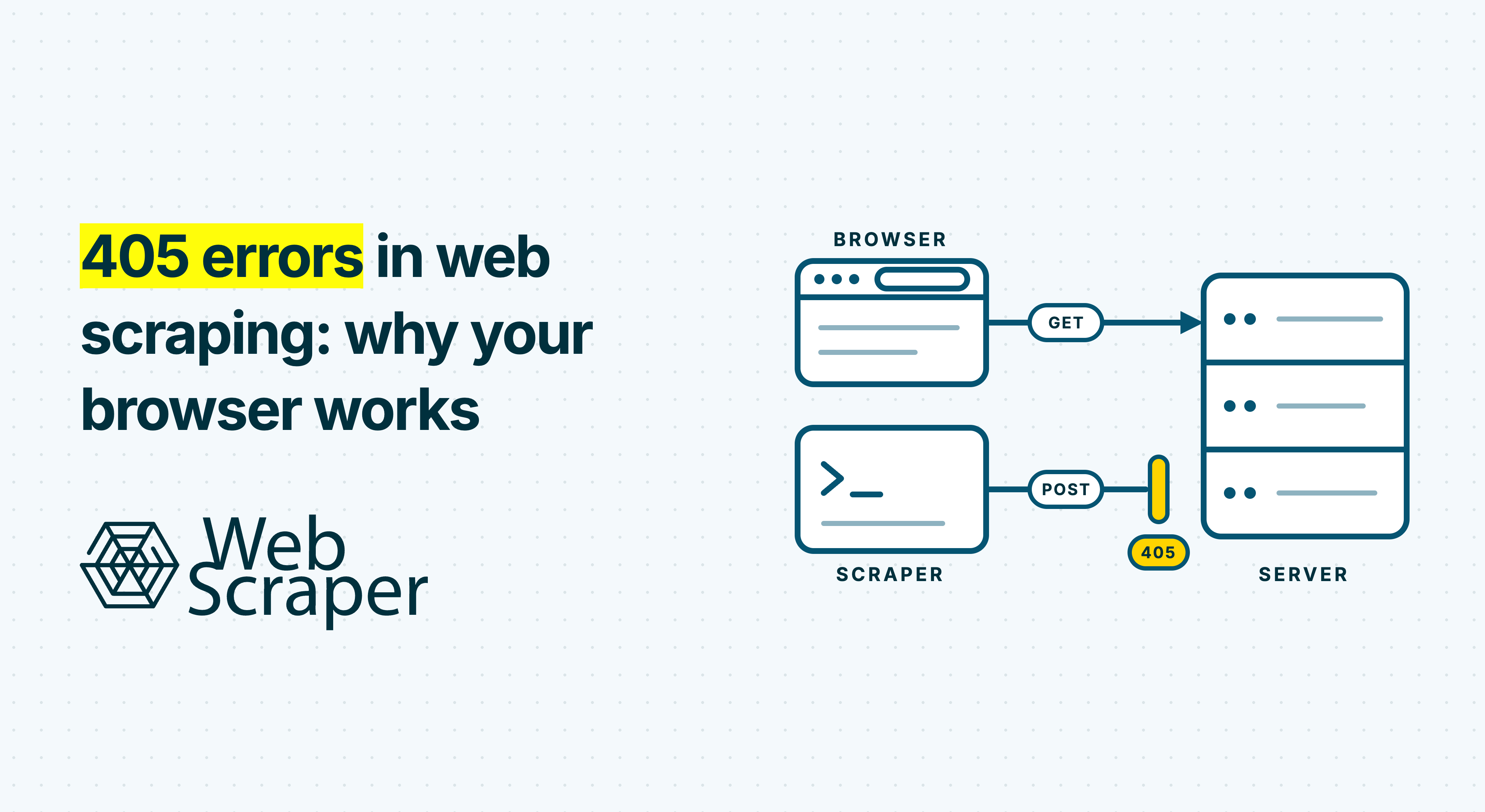
A 405 Method Not Allowed response normally means that the requested resource does not support the HTTP method used. During web scraping, a security layer can also return 405 before the request reaches the page. AWS WAF, for example, uses this status for its CAPTCHA action.

The page opening in your browser does not settle which explanation applies. Your browser may send a different request, carry accepted session state or complete a verification flow. Compare the actual requests and responses before changing the scraper.

Continue Reading

Best web scraping tools for handling anti-bot protection

October 24, 2026

web scraping tools, Web Scraper Cloud, scraping costs, residential proxies, anti-bot protection
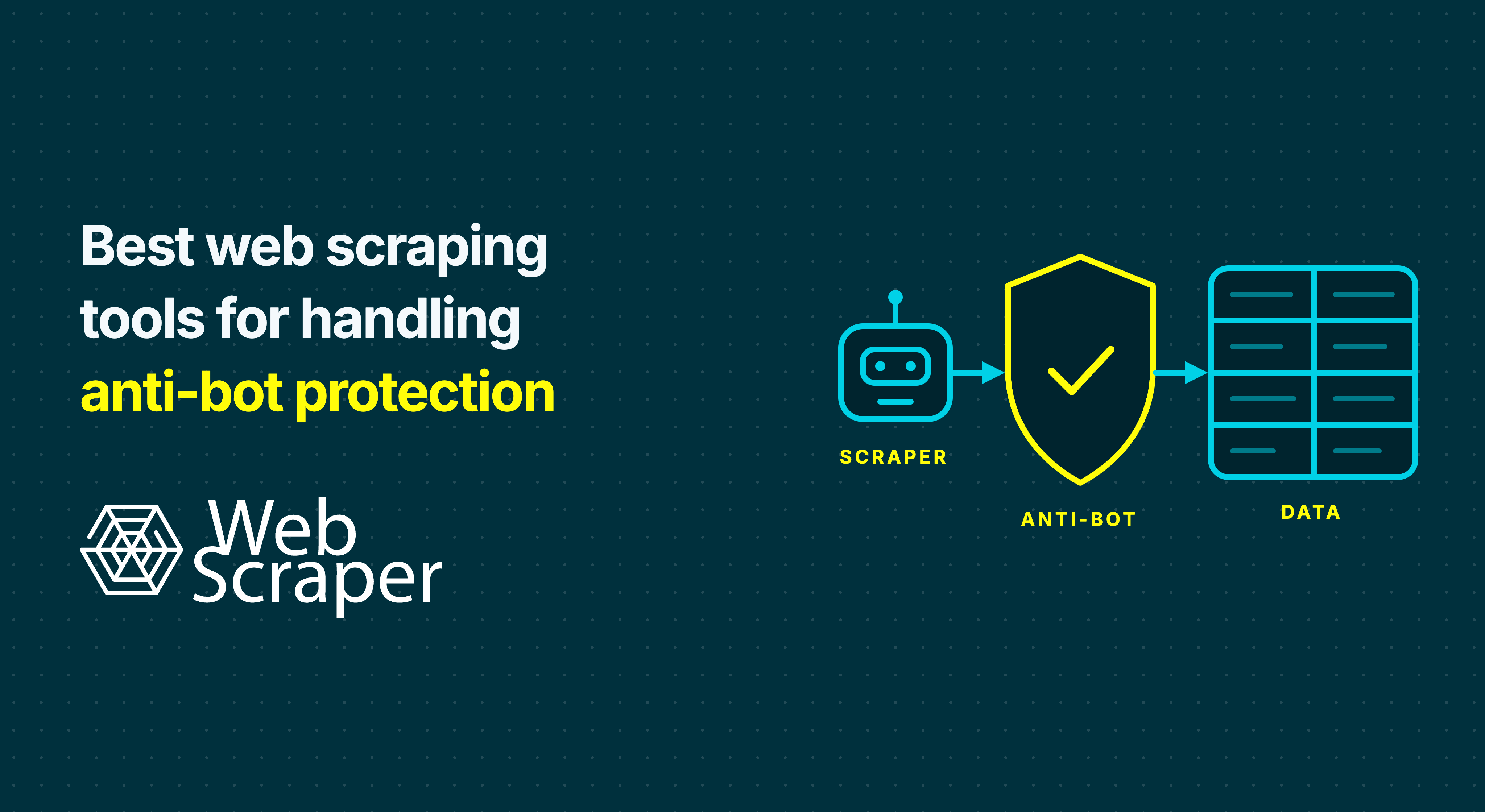
For recurring product catalogues, marketplace listings, property data and business directories, Web Scraper Cloud is our best-value starting point. It combines managed anti-bot handling with structured extraction, scheduled collection and delivery in one platform.

Residential proxy pricing is one of the first things to compare. A low subscription price can become a substantial operating bill when a protected scraping job transfers hundreds of gigabytes. This guide compares eight tools by their access capabilities, billing models and the work needed to deliver a usable dataset.

Continue Reading

Best web scraping tools for niche websites

October 16, 2026

data extraction, web scraping tools, Web Scraper Cloud, custom sitemaps, product data
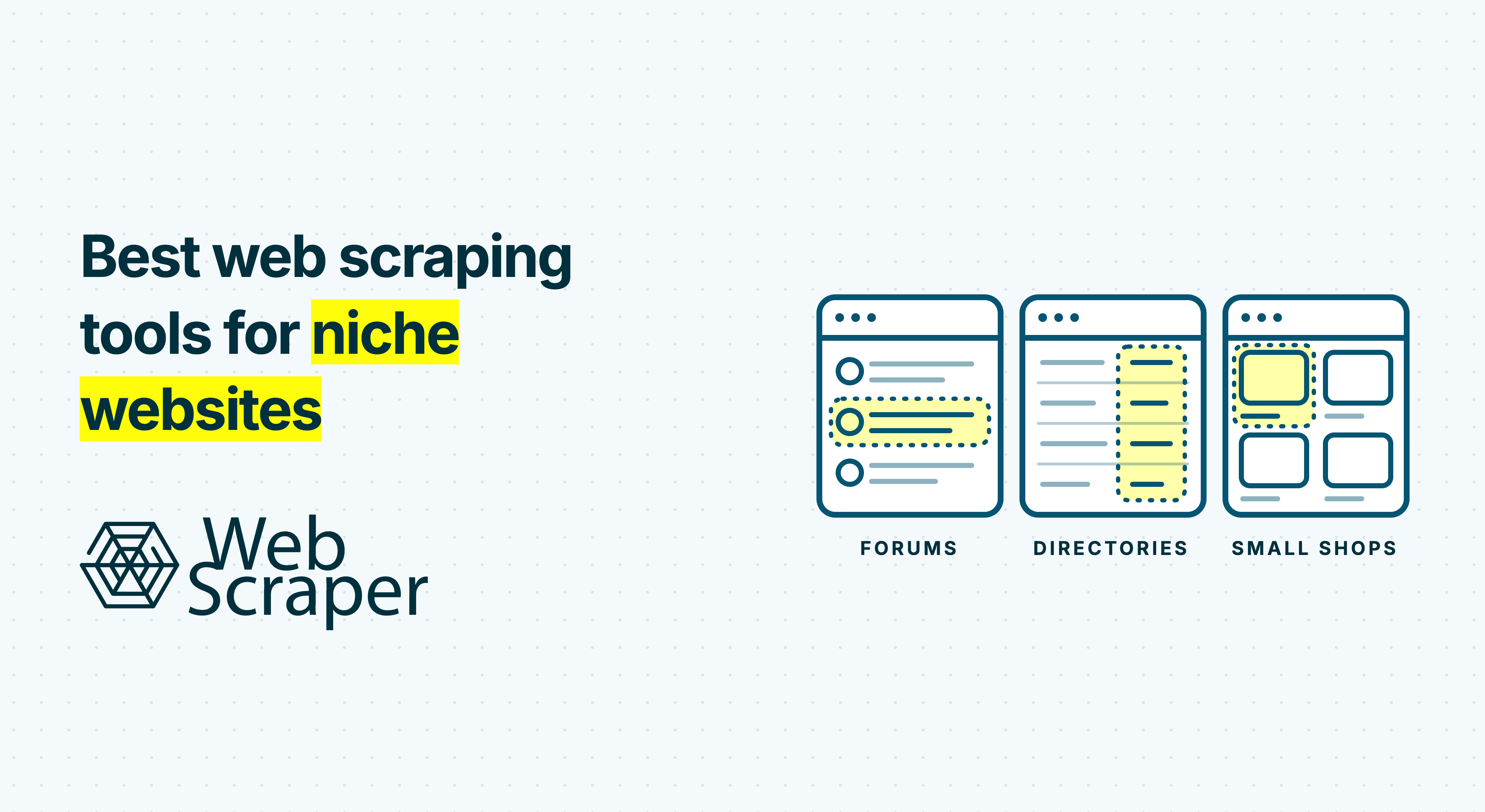
The best web scraping tools for niche websites let you define the extraction when a ready-made scraper does not cover your source or required fields. For operations teams building recurring structured datasets without writing scraper code, Web Scraper is our recommended starting point.

Think specialist supplier catalogues, regional retailers, industry directories and smaller job boards. Octoparse, ParseHub, Browse AI and Apify also offer custom setup routes. The useful comparison is what your team can configure, validate and maintain after a template search comes up empty.

Continue Reading

Researchers got AI search engines to cite a made-up concept

October 15, 2026

market research, data quality, source verification, AI search, web scraping
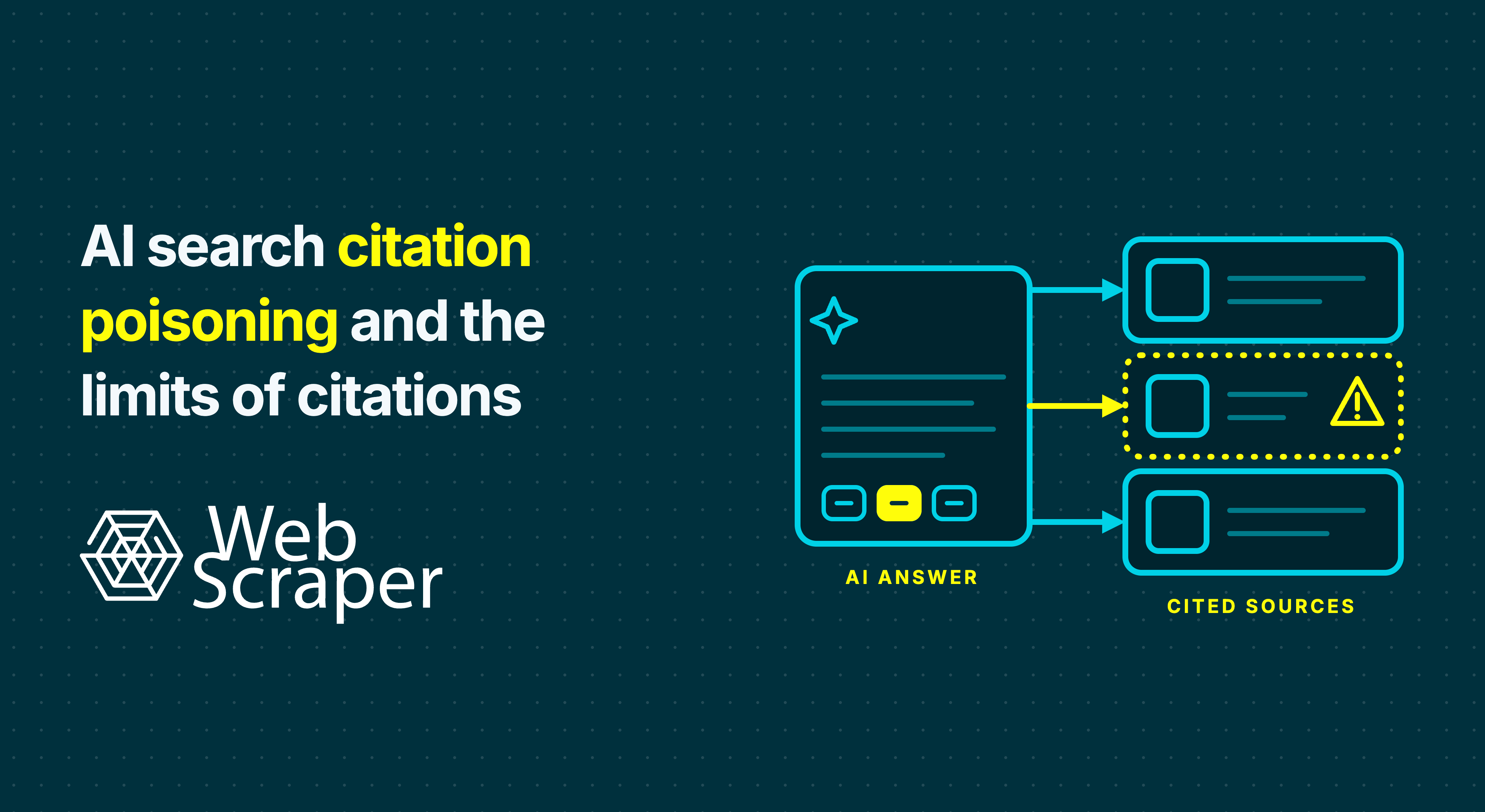
Researchers published material about a fictional “Cactus Gravity Protocol” and saw it cited by eight of ten tested AI search platforms, including ChatGPT and Perplexity, within seven days. For businesses using AI to investigate markets or suppliers, the result raises a practical question: what does a citation actually prove?

Continue Reading

Cloudflare lets websites refuse AI training while staying visible in search

October 13, 2026

search visibility, web scraping, AI training, content signals, Cloudflare
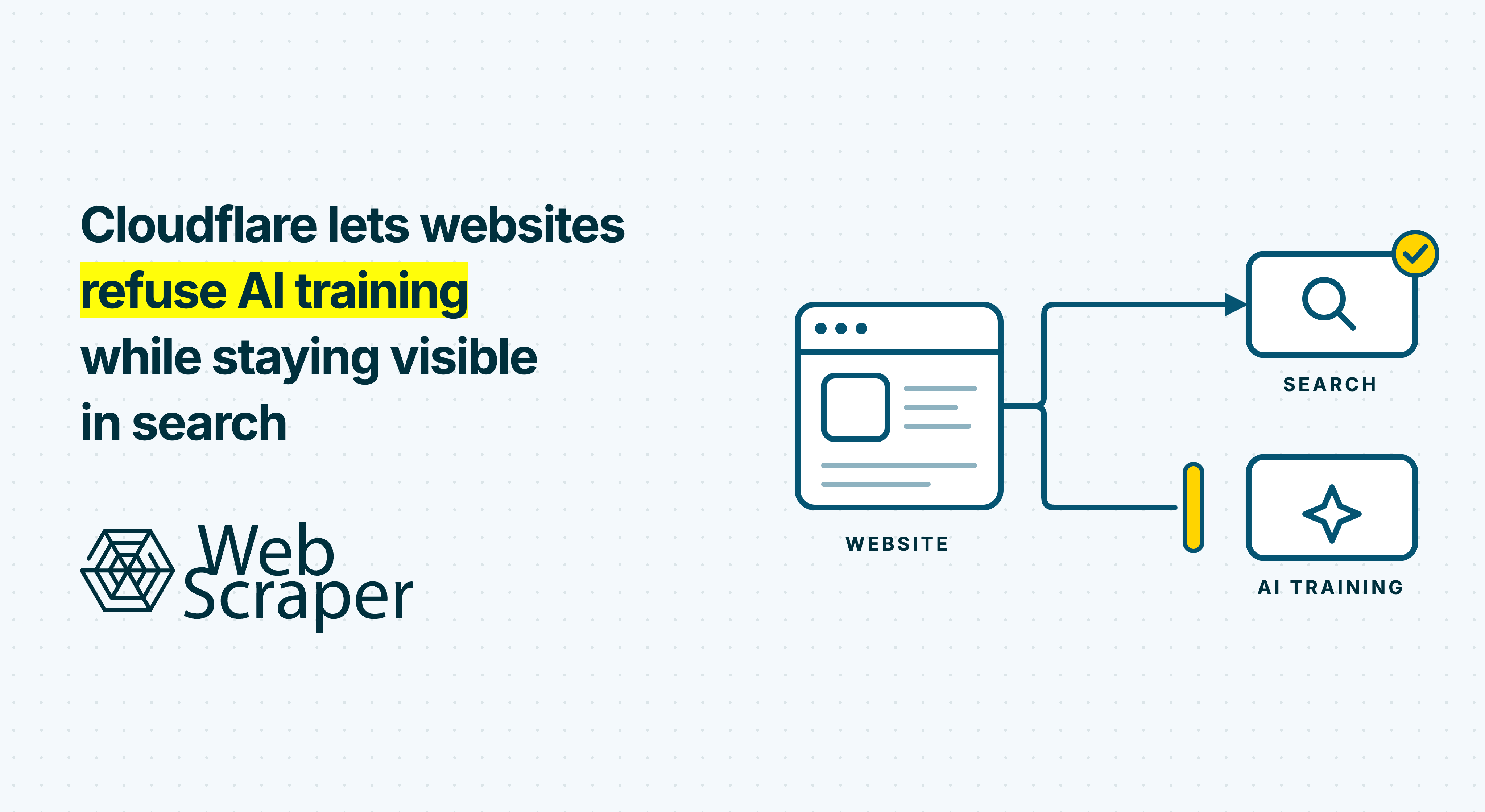
Cloudflare introduced Disallow AI Training on 15 September 2026, giving website owners a way to refuse model training while keeping supported search crawlers on their sites. It combines published preferences with selective crawler blocking, rather than treating every AI-related request alike.

The setting preserves a route to search discovery, with support that varies by operator. It does not guarantee indexing, rankings or referrals.

Continue Reading

Why AI browser agents still need their results checked

October 11, 2026

Data validation, AI browser agents, browser agent reliability, supplier research, web scraping
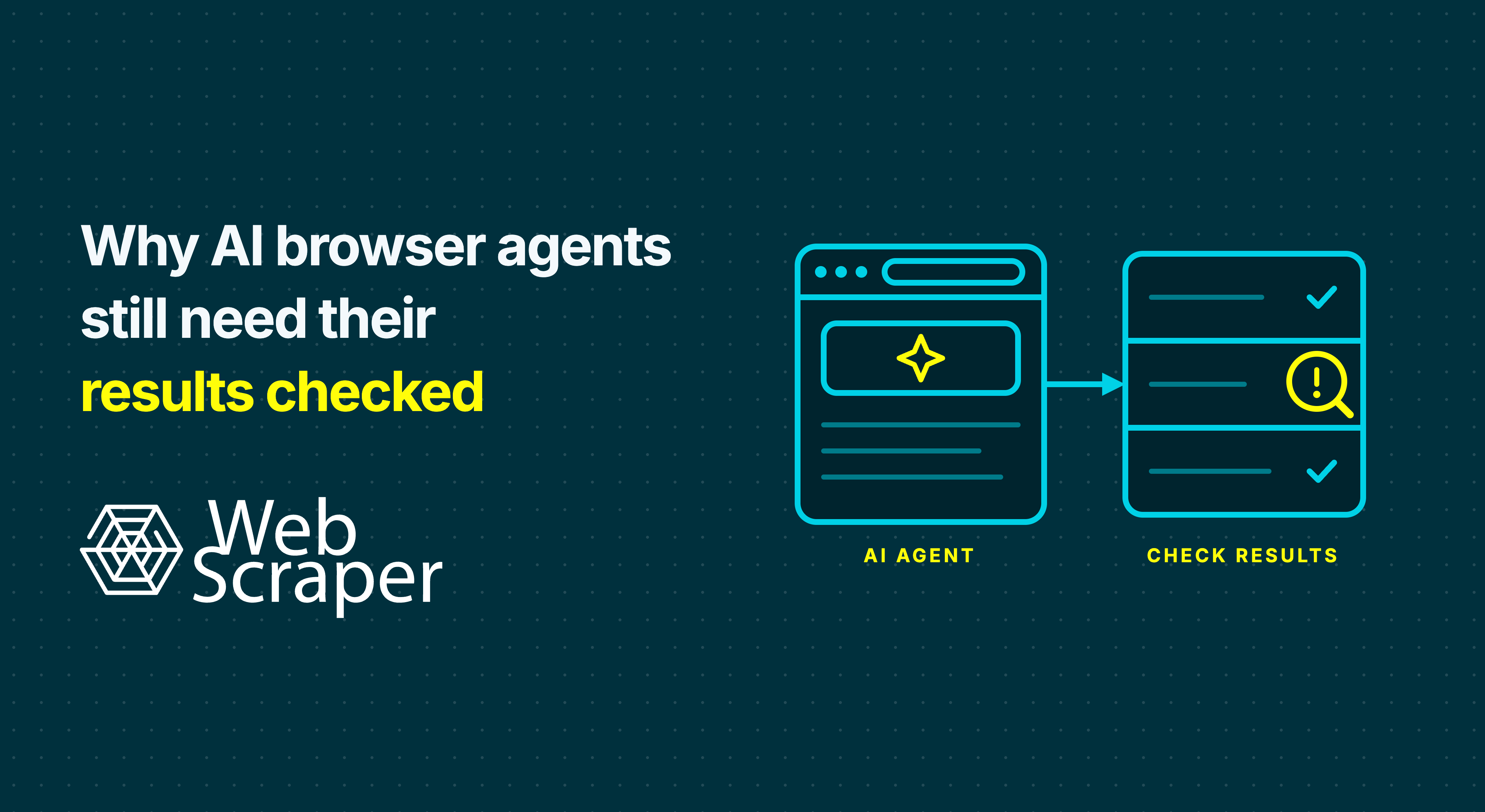
AI browser agents can navigate unfamiliar websites, collect information and return a useful comparison. Their results still need checking because successful navigation, accurate individual values and a correct business recommendation are separate achievements.

Before an output informs a purchase, report or recurring dataset, compare its evidence with the original requirements. A confident completion message cannot establish that the agent found every required source, compared equivalent products or applied the conditions that make its recommendation valid.

Continue Reading

What Europe’s draft AI scraping guidelines mean for businesses

October 10, 2026

data governance, EDPB, GDPR, AI training data, web scraping
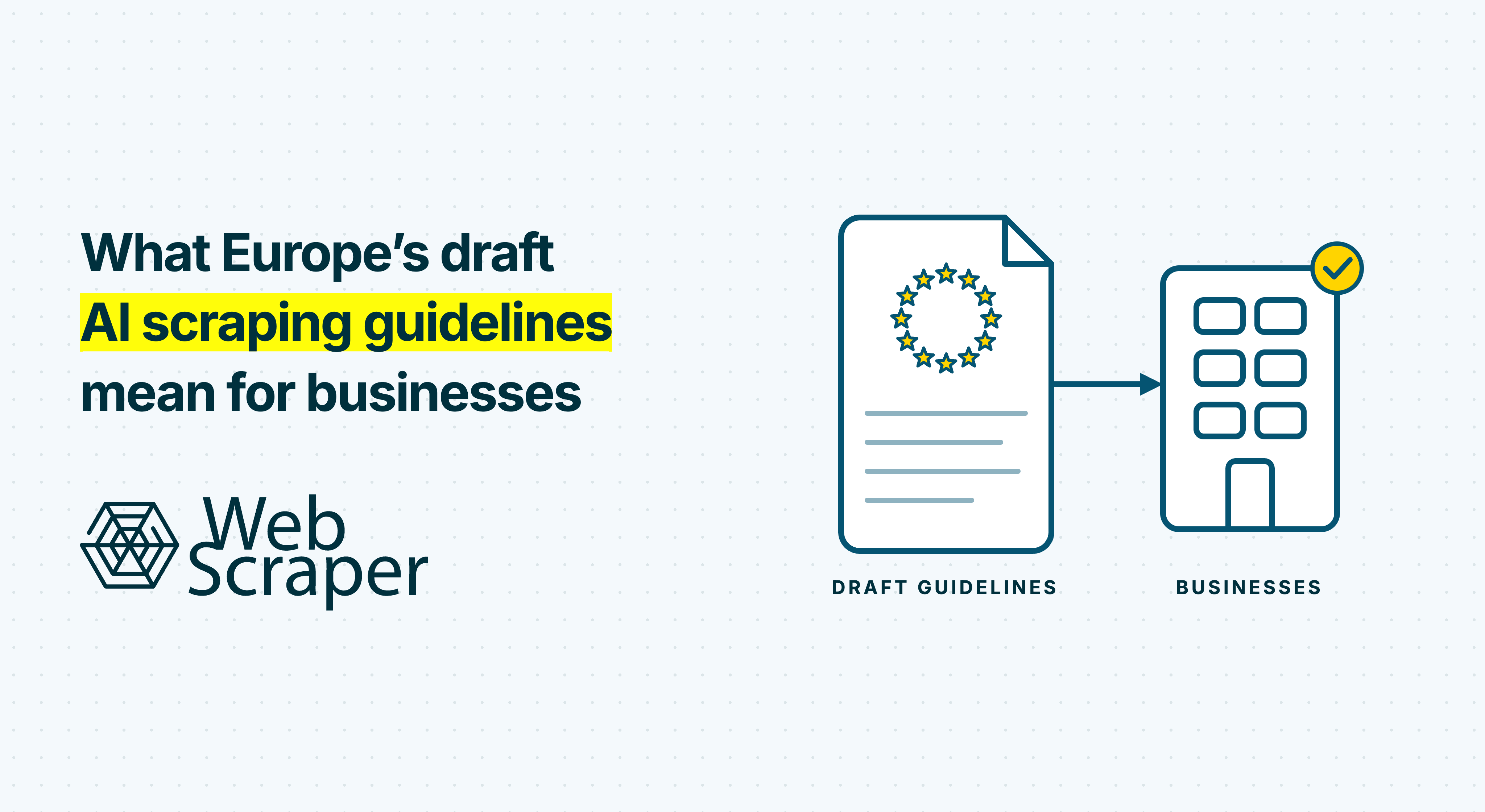
The European Data Protection Board adopted draft AI scraping guidelines for consultation on 7 July 2026. They explain how existing GDPR duties apply when businesses collect web data to develop generative AI.

As of 16 October 2026, Guidelines 03/2026 remain open for consultation, with comments due by 30 October 2026. That is the feedback deadline. Businesses already processing personal data must assess their activities under the existing GDPR framework. The practical recommendations below explain how to turn that assessment into collection and purchasing decisions.

Continue Reading

Scraping ChatGPT and Perplexity: why answers matter

October 09, 2026

market research, data quality, AI search, web scraping, Competitive intelligence
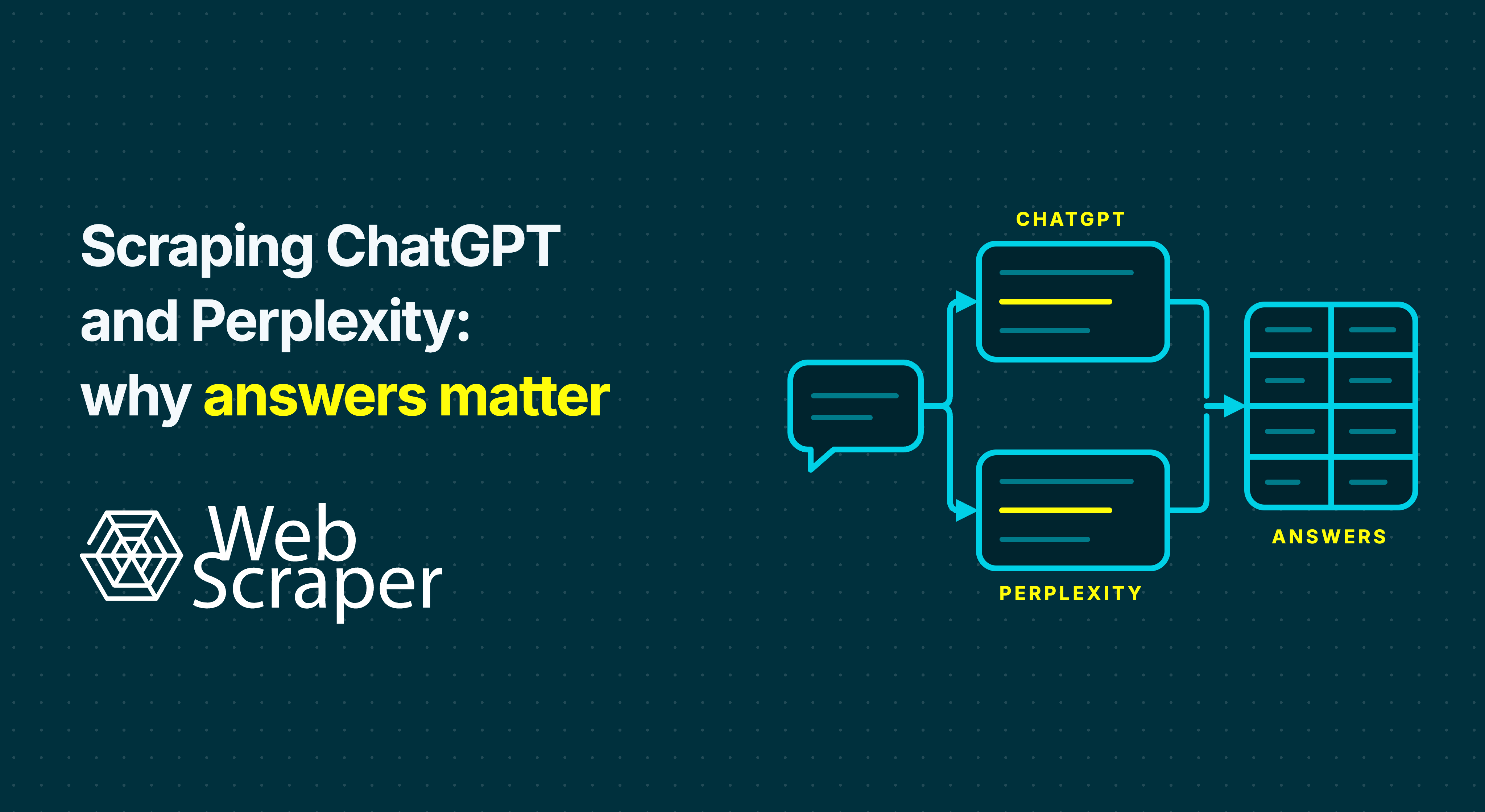
Businesses are scraping ChatGPT and Perplexity to study the answers they produce: which products they recommend, how they describe companies and which pages they cite. AI services have become another source of competitive intelligence, alongside the websites they help people discover.

Continue Reading

How to scrape restaurant menus and prices

October 08, 2026

price monitoring, Web Scraper Cloud, data quality, no-code scraping, Restaurant menu data

To scrape restaurant menus and prices, select each dish's container, then extract its name and price from inside that container. Keep the branch, menu period and portion size with the result so that each price describes the right offer.

With Web Scraper, you can build and test this structure in the browser extension, export a sample, then move the validated sitemap to Cloud for recurring collection.

Continue Reading