Blog

Web Scraper vs Browse AI

September 03, 2026

data extraction, web scraping tools, no-code scraping, web scraping, Web Scraper vs
Web Scraper and Browse AI are both no-code tools for collecting data from websites, but they are designed around different workflows. Browse AI is built around training an AI robot on a page, then using that robot for extraction, monitoring and integrations. Web Scraper is built around creating an inspectable sitemap that defines how pages are navigated and which fields become records.

For a quick one-site monitor or a simple extraction that should flow into a spreadsheet, Browse AI may be the faster starting point. For recurring product, marketplace, directory, job or real-estate datasets that need explicit navigation, repeatable field logic, validation and economical high-volume execution, Web Scraper is usually the stronger choice.

Continue Reading

Browser extension vs desktop web scraper: how to choose

September 02, 2026

web scraping tools, cloud scraping, browser extension, desktop web scraper
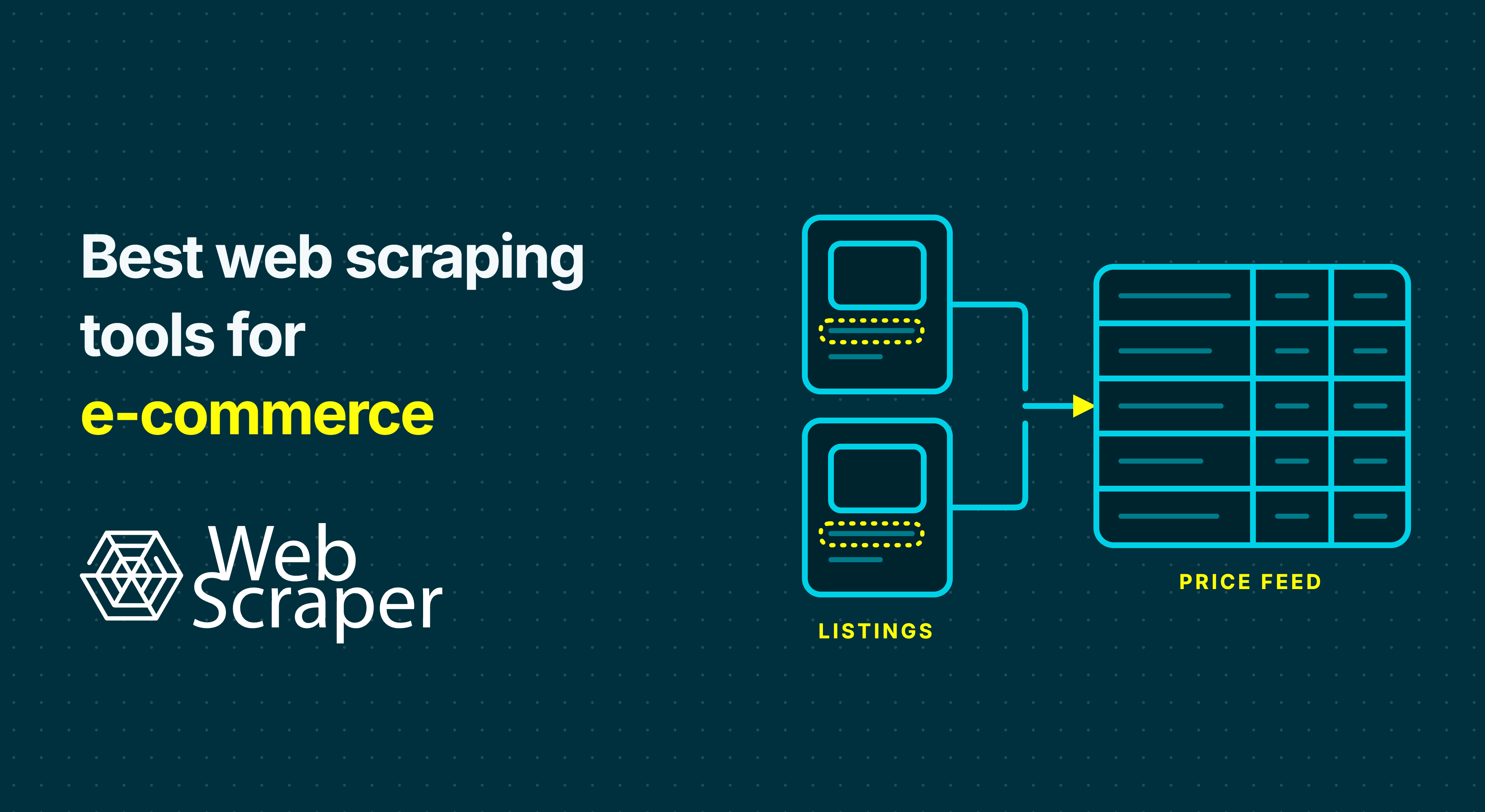
A browser extension is not automatically a basic scraper, and a desktop application is not automatically production-grade. Those labels mainly describe where you open the builder. They do not reliably tell you where jobs run, where data is stored or whether the workflow can operate unattended.

For occasional extraction, a local browser extension may be enough. For a repeatable business dataset, the stronger choice is often a hybrid workflow: build and test the scraper against the live website in your browser, then run the tested configuration in managed cloud infrastructure.

Continue Reading

Best web scraping tools for e-commerce

September 02, 2026

price monitoring, web scraping tools, data automation, product data
The best web scraping tool for e-commerce is the one that produces a dependable product dataset, not simply a successful page request. For most data and operations teams, Web Scraper is the strongest overall choice because its visual sitemap models catalogue traversal and record structure, while Web Scraper Cloud adds scheduling, managed browser execution, quality controls and delivery.

That recommendation is not universal. Octoparse suits teams that prefer a desktop application and templates, Apify suits developers who want ready-made and programmable cloud jobs, and enterprise APIs can be a better choice when they already support the required retailer. The comparison below makes those boundaries explicit.

Continue Reading

CAPTCHA web scraping and Cloudflare Turnstile

September 01, 2026

Cloudflare Turnstile, web scraping reliability, Web Scraper Cloud, data quality, scraping project planning
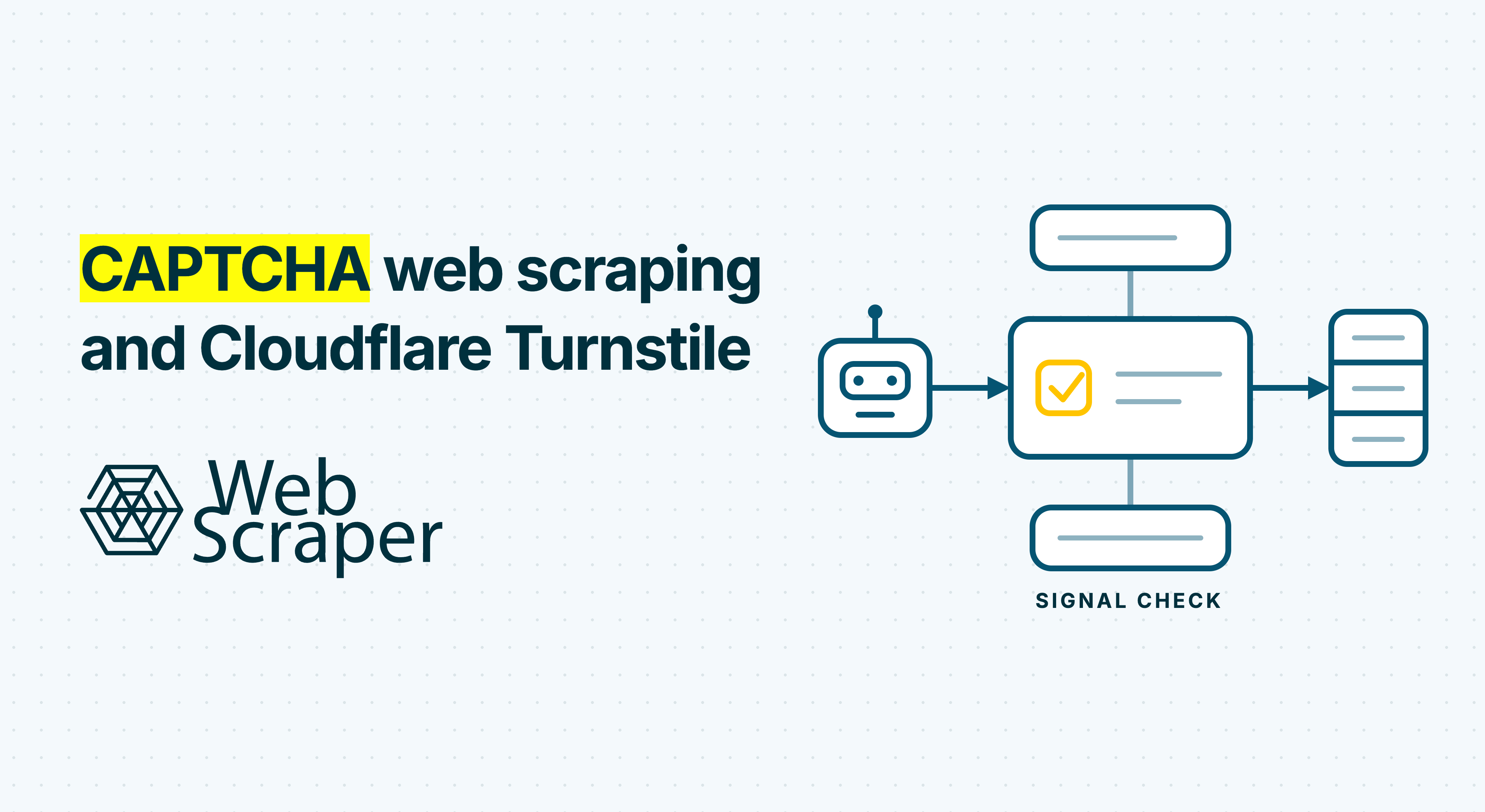
A CAPTCHA or Cloudflare Turnstile check does not automatically make a scraping project impossible. It does mean that one successful page load is no longer enough evidence for a recurring data workflow.

The real question is whether the target can produce a complete, correct and economical dataset repeatedly under production conditions. Answering that requires a defined output contract, a representative pilot and clear criteria for proceeding, revising the design, using an authorised alternative or stopping.

Continue Reading

How to scrape infinite scroll pages and lazy-loaded content

September 01, 2026

Web Scraper selectors, lazy loading, Web scraping automation, data quality, infinite scroll
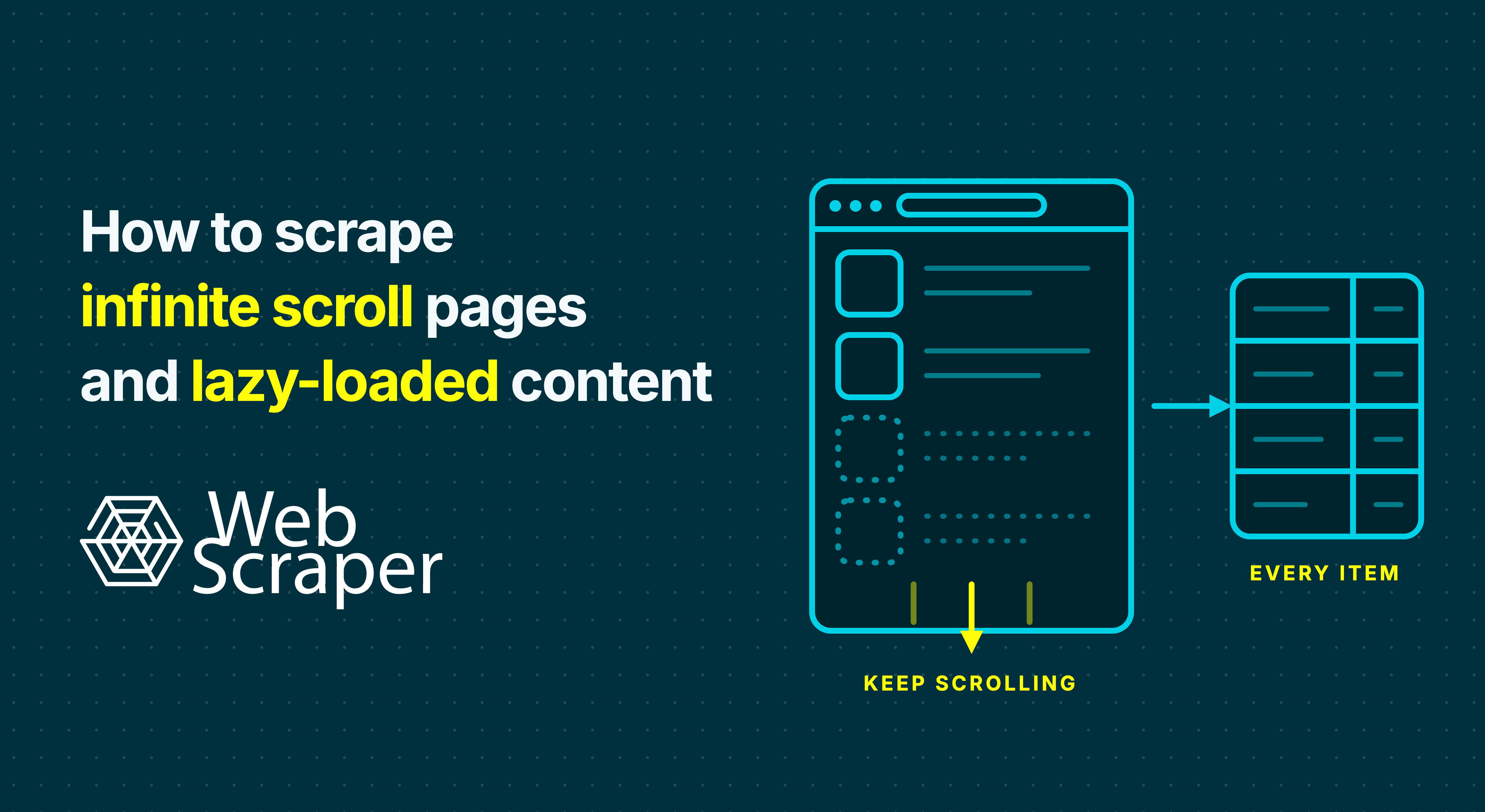
To scrape infinite scroll pages reliably, identify the action that reveals new records, reproduce it with the right selector, and stop only when a defined dataset boundary has been reached. Scrolling, clicking Load more and waiting for a field to appear are different workflows, even when the page makes them look similar.

The goal is not simply to move a browser to the bottom. It is to produce a complete, correctly structured dataset that can pass the same checks on every run. That requires a dataset contract, a defensible stopping rule and validation from the first batch to the last.

Continue Reading

How headless browsers work in web scraping

August 31, 2026

Web Scraper Cloud, data quality, browser automation, web scraping, JavaScript
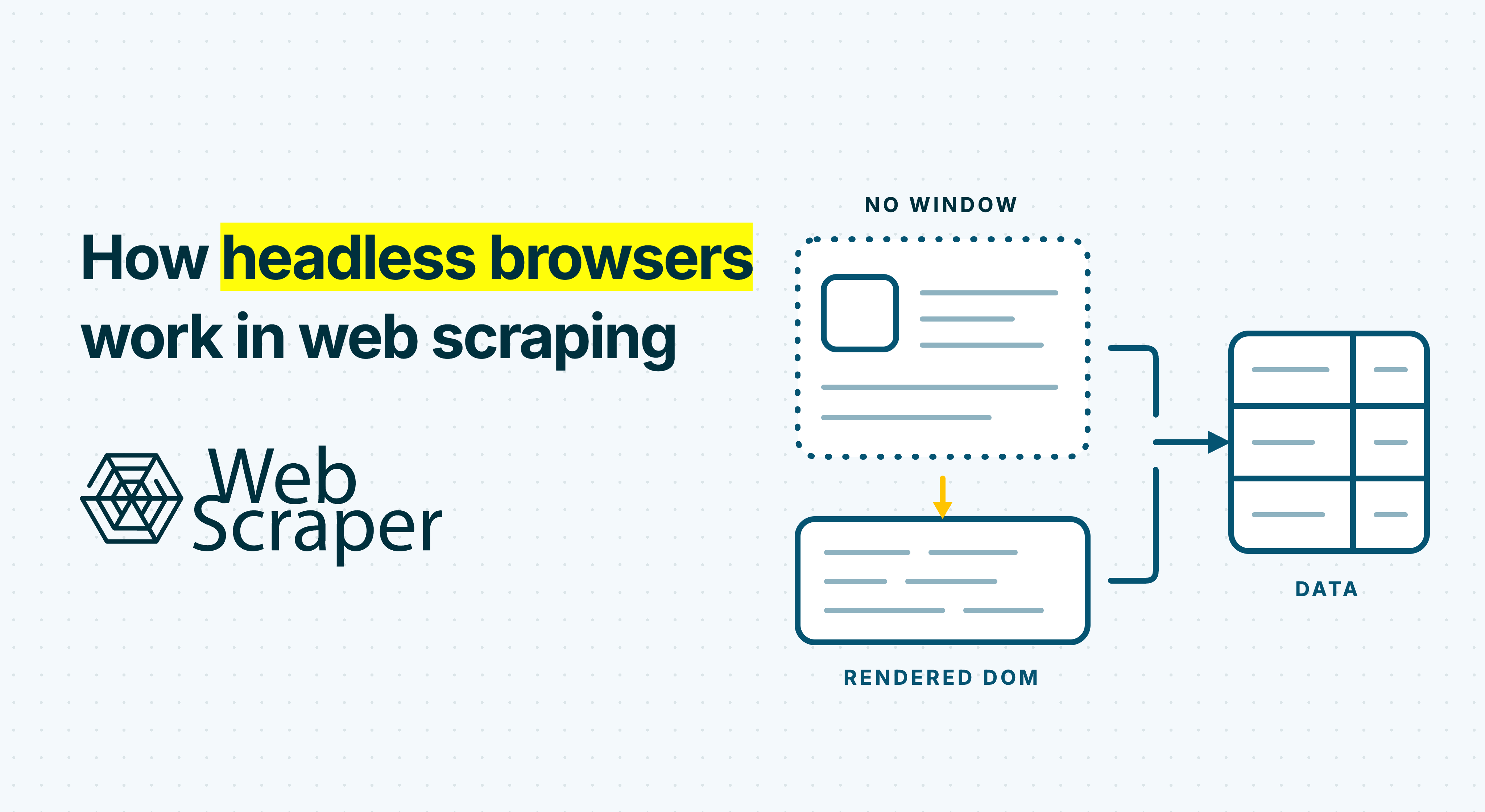
A headless browser is a real browser running without a visible user interface. In web scraping, automation software uses it to load a page, execute JavaScript, perform interactions and read the resulting live document.

That makes headless browsers useful when the dataset does not exist until the website has rendered or changed state. It also makes them heavier and more failure-prone than processing raw HTML, so the important question is not whether a website uses JavaScript. It is whether browser execution is required to produce the specific data you need.

Continue Reading

How to find where a website gets its data

August 31, 2026

embedded JSON, Fetch and XHR, web scraping, website data, Chrome DevTools
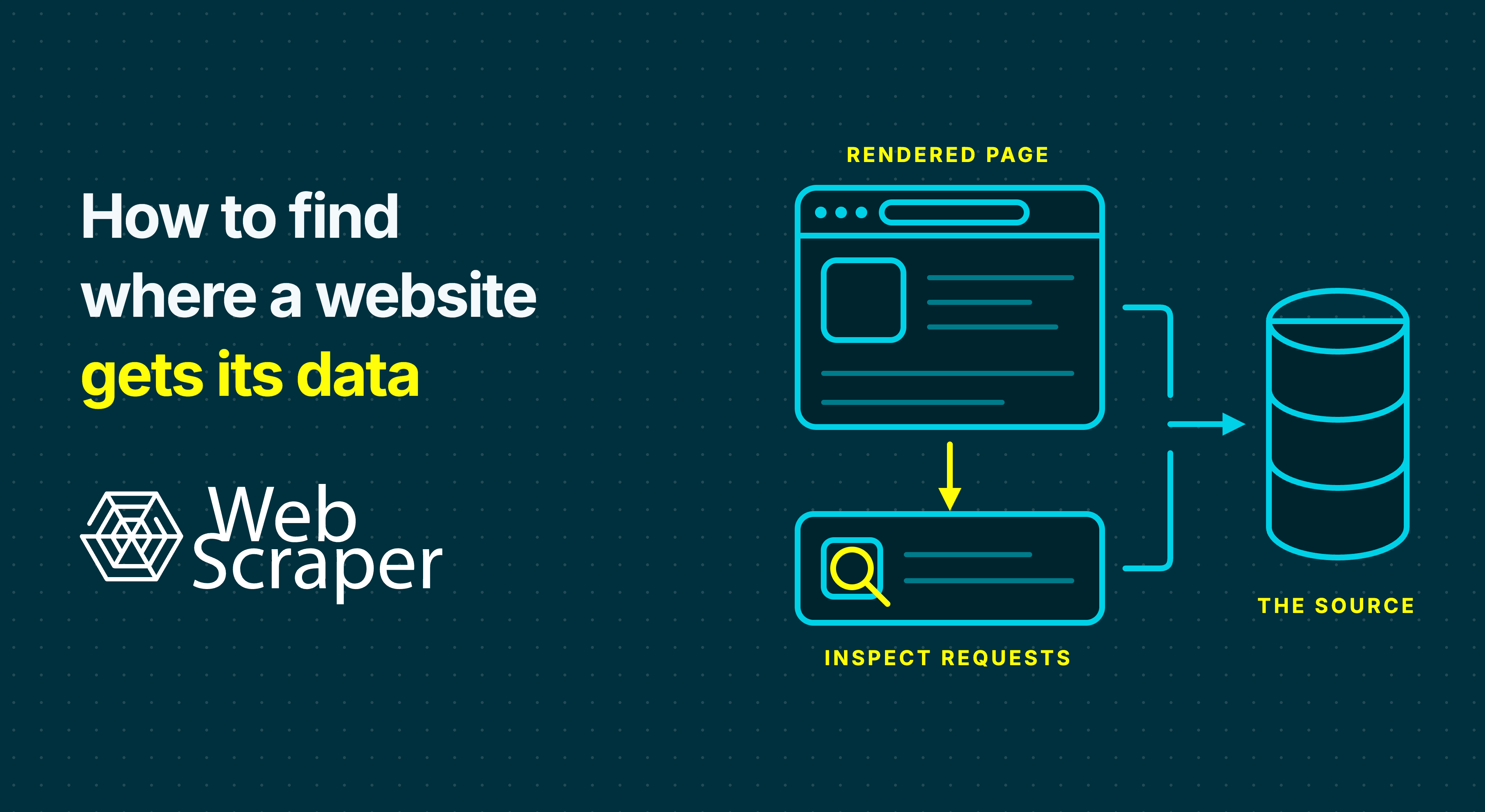
To find where a website gets its data, trace one distinctive value through the main document, embedded JSON, background requests and the live page after any required interaction. This reveals the simplest extraction route that can reproduce the data reliably.

DevTools can show how data reaches the browser. It cannot reveal the website's hidden upstream database or prove where the information originally came from. The practical goal is to identify a complete, repeatable browser-visible source for the records you need.

Continue Reading

robots.txt and web scraping: what it actually means

August 28, 2026

data governance, crawler rules, web scraping, responsible scraping
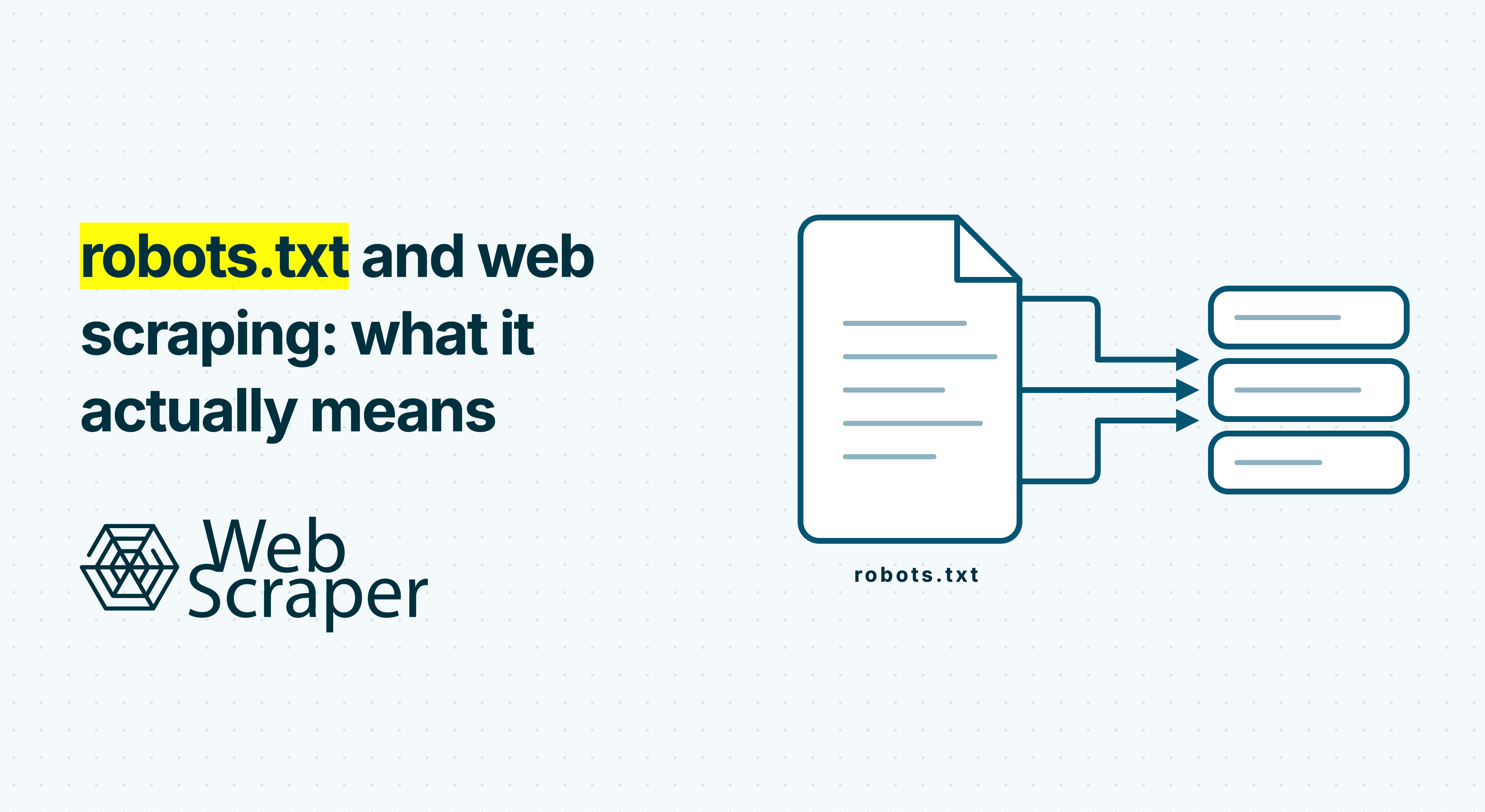
A robots.txt file tells compliant automated clients which URL paths a website asks them to access or avoid. It does not technically block a scraper, grant permission to collect or reuse data, or decide whether a scraping project is lawful.

For a real project, treat robots.txt as an important input to a wider decision. Read the rule that applies to your crawler, respect excluded paths, control the total request load, and separately check access controls, terms, data rights and authorised alternatives before scraping at scale.

Continue Reading

Web scraping software vs managed scraping service

August 28, 2026

data operations, web data, managed scraping service, scraping platforms
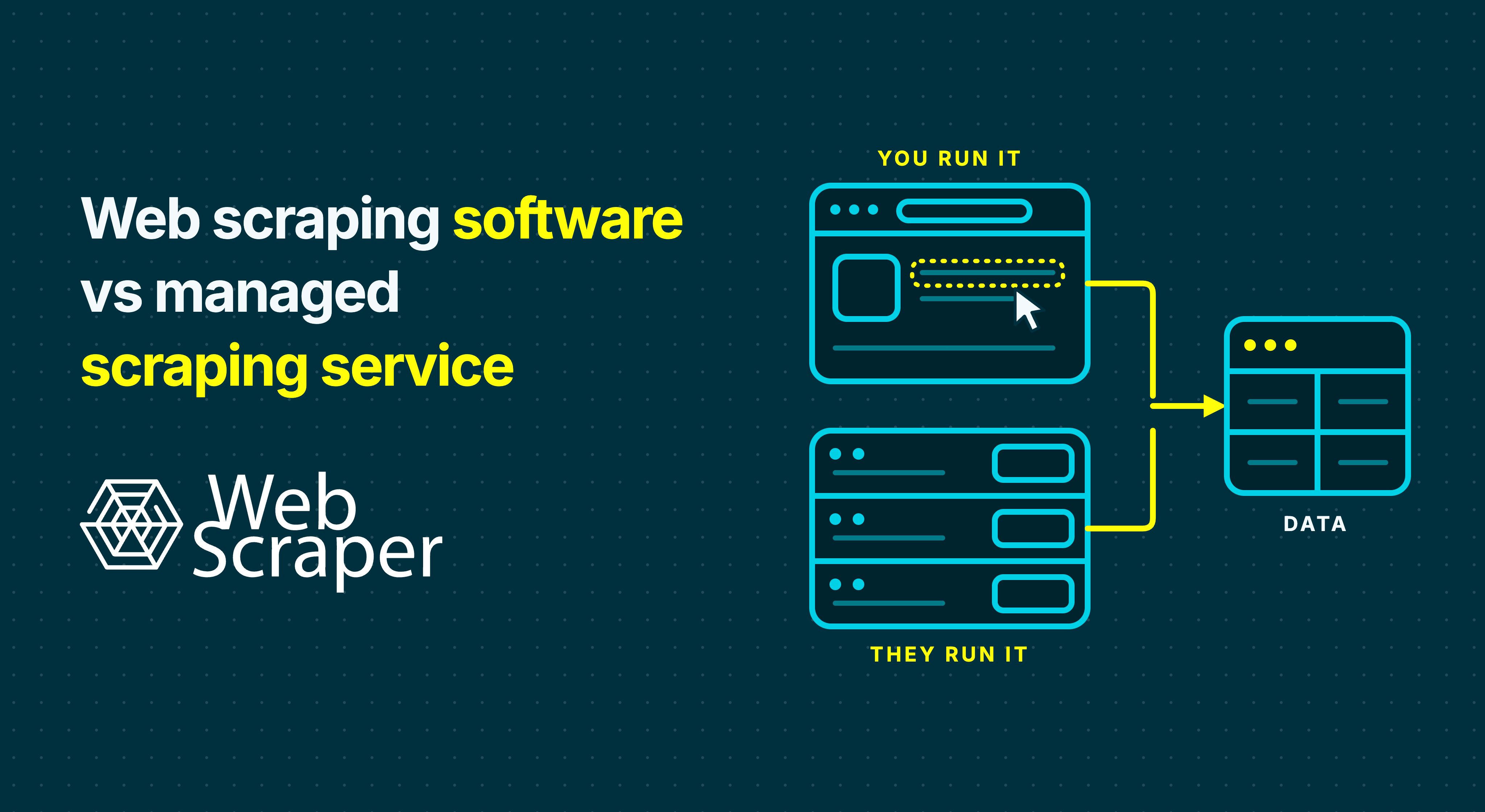
Web scraping software gives your team direct control over how a dataset is collected and maintained. A managed scraping service takes on more of the target-specific work and delivers data against an agreed scope.

For recurring public data, self-service software is often the stronger starting point when someone can own the scraper. Choose a managed service when the real requirement is to outsource configuration, repairs, quality assurance and delivery, not simply to run scraping jobs in the cloud.

Continue Reading

Browser fingerprinting and bot detection explained

August 27, 2026

bot detection, Browser fingerprinting, Scraper troubleshooting
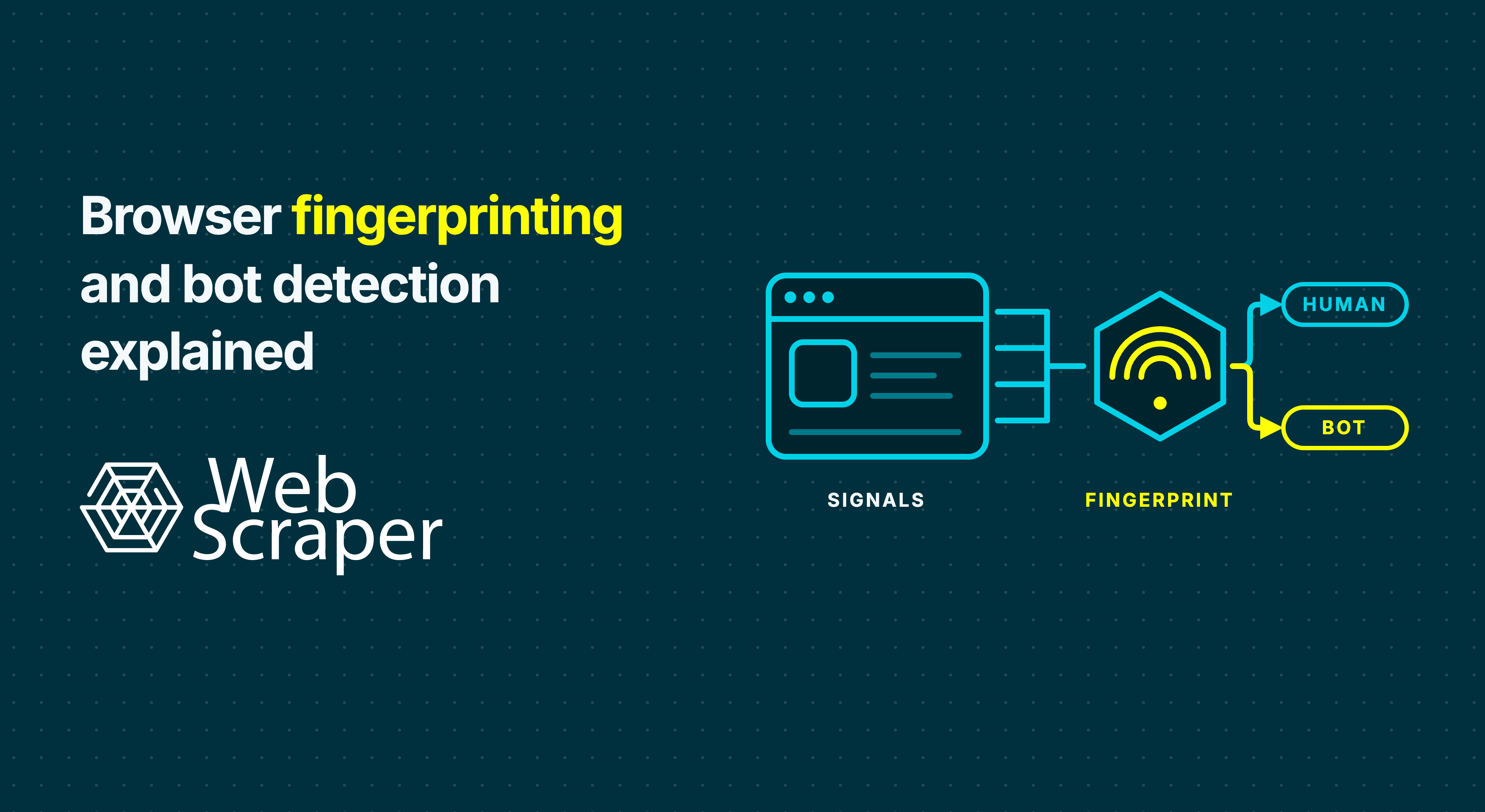
Browser fingerprinting lets a website observe and combine characteristics of a request, browser, device and session. In bot detection, those characteristics are usually evidence within a wider classification process, not one magic identifier.

That is why changing an IP address or user-agent string may not fix a blocked scraper. The transport, JavaScript environment, automation state, session history or request behaviour can still look automated, and a successful response can still contain the wrong page.

Continue Reading

Web Scraper vs Simplescraper

August 27, 2026

web scraper, data extraction, web scraping, Comparison

Simplescraper is the quicker choice when you want to detect a clear list, extract it with minimal configuration and send the result to an API or no-code integration. Web Scraper is the stronger overall choice for recurring commercial datasets that span pagination and detail pages, require explicit validation or need economical Cloud execution at scale.

Both combine browser-based setup with Cloud automation. The important difference is what happens after the first successful scrape: how the workflow is maintained, how incomplete output is detected and how much it costs as volume grows.

Continue Reading

Web Scraper vs Data Miner

August 27, 2026

Data extraction tool, web scraping tools, web scraping, Comparison
Web Scraper and Data Miner are both no-code browser scraping tools, but they suit different jobs. Data Miner can be quicker when a current recipe fits a small browser-run task. Web Scraper is stronger when the extraction must become a reusable, validated dataset that combines multiple page types and later runs remotely on a schedule. Here, Data Miner refers to the product, not the separate discipline of analytical data mining.

Continue Reading

Free web scraper vs paid web scraper: when to pay

August 26, 2026

Web Scraper extension, Web Scraper Cloud, web scraping
Use a free web scraper for occasional, supervised jobs. Pay for managed execution when the same dataset must run on schedule, recover from failures or reach another system without manual work.

Continue Reading

Visual web scraper vs Python script

August 26, 2026

Scripts, Web Scraper Cloud, Visual scrapers, web scraping, Python
A visual web scraper is usually the better starting point when a business needs a repeatable dataset that analysts, operations staff and developers can all inspect. A Python script is stronger when the workflow needs arbitrary logic, deep application integration or complete control over the runtime.

Both approaches can extract one value from one page. The better choice is the one your team can validate, repair and operate after pagination, JavaScript, layout changes and recurring execution are added.

Continue Reading

Web scraping project cost: a practical estimate

August 26, 2026

Web Scraper Cloud, Proxy management, Scraping infrastructure

A useful web scraping project cost estimate is not the price of a scraper, server or subscription. It is the total cost of delivering data that meets your coverage, quality and freshness requirements.

The practical method is to define the accepted output, measure a representative pilot and calculate total cost per accepted record or dataset. This exposes retries, validation, maintenance and operating labour that a price-per-page comparison can miss.

Continue Reading