Blog

Do you need a proxy for web scraping?

August 25, 2026

web scraping, Proxy management, proxy rotation, proxy
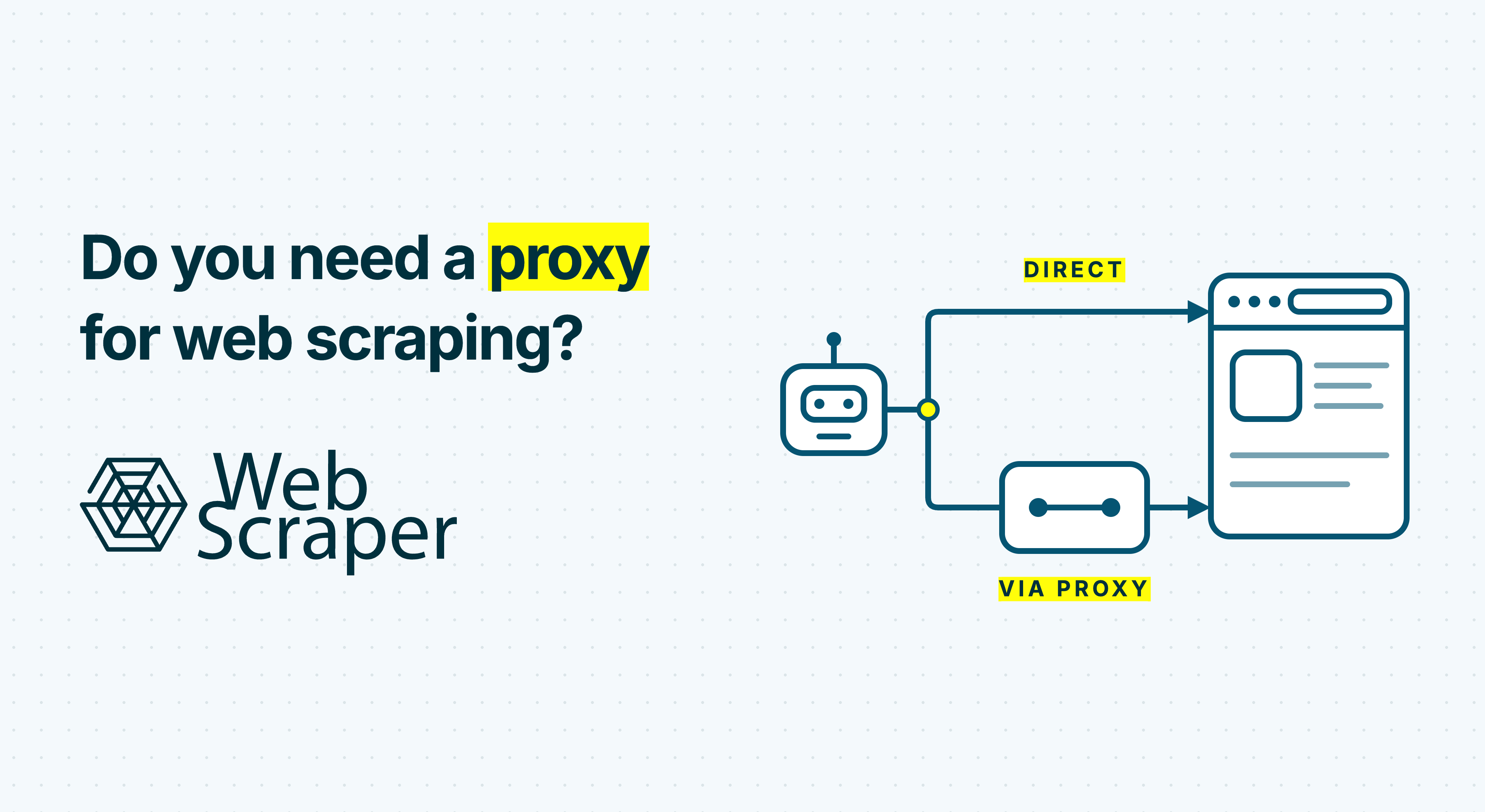
No, not every web scraping job needs a proxy. A small test or occasional collection from accessible public pages may work reliably from your normal connection. Add a proxy when evidence shows that the source IP, network type or location is causing failures, or when repeatable automation would otherwise depend on one route.

Usually, test directly first, use a datacenter proxy when routine automation needs another route, and test residential routing only when controlled results justify the extra cost and complexity.

Continue Reading

Browser automation vs HTTP scraping: how to choose

August 25, 2026

HTTP, browser automation

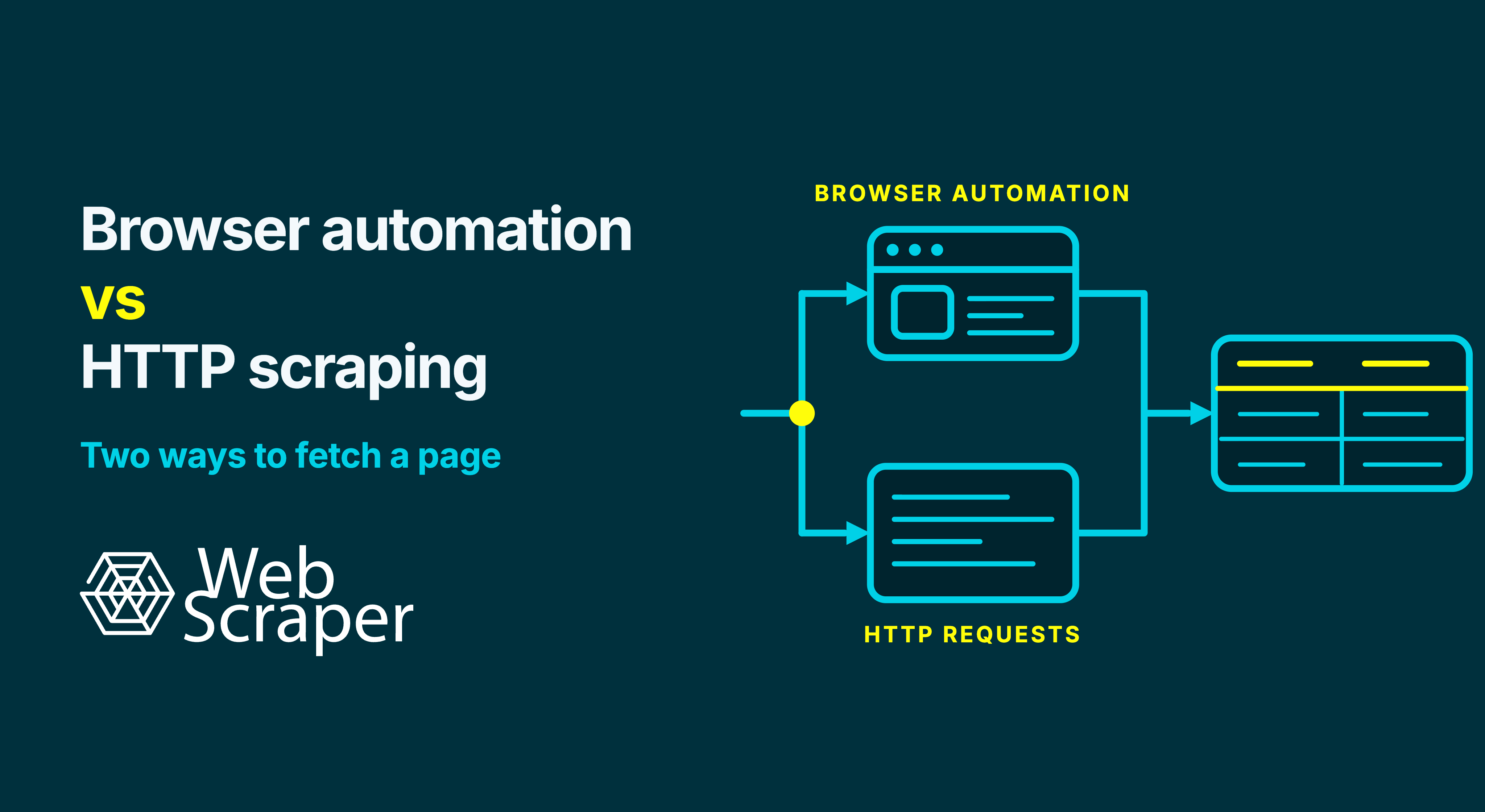
Use HTTP scraping when the response already contains every required record, field and link. Use browser automation when JavaScript or an interaction must create the data or page state first.

The decision should follow the dataset you need, not whether the website merely uses JavaScript. On mixed sites, separate HTTP and browser routes often provide the clearest balance of reliability, scale and maintainability.

Continue Reading

Web Scraper vs Thunderbit

August 25, 2026

web scraper, Web Scraper Cloud, web scraping

Web Scraper is the stronger choice for repeatable, structured data pipelines. Thunderbit is better for quick AI-assisted browser-to-spreadsheet extraction.

The key difference is control: Web Scraper prioritises reusable, inspectable workflows, while Thunderbit prioritises speed and minimal setup.

Continue Reading

What is the easiest way to scrape a website?

August 25, 2026

data extraction, Web Scraper Cloud, web scraping
For a few values on one page, the easiest method is copy and paste. For a repeatable structured dataset, the easiest way to scrape a website is usually an AI-assisted no-code browser extension. It lets you work on the live page, test the result and reuse the extraction setup without maintaining a custom script.

The simplest first attempt is not always the simplest long-term method. Pagination, JavaScript, multiple page layouts and access restrictions can turn an apparently easy scraper into an ongoing engineering task. Choose the least complex method that can still return every required record and field when you run it again.

Continue Reading

How to collect product names, prices and SKUs

August 24, 2026

Web scraping platforms, web scraping tools, E-commerce
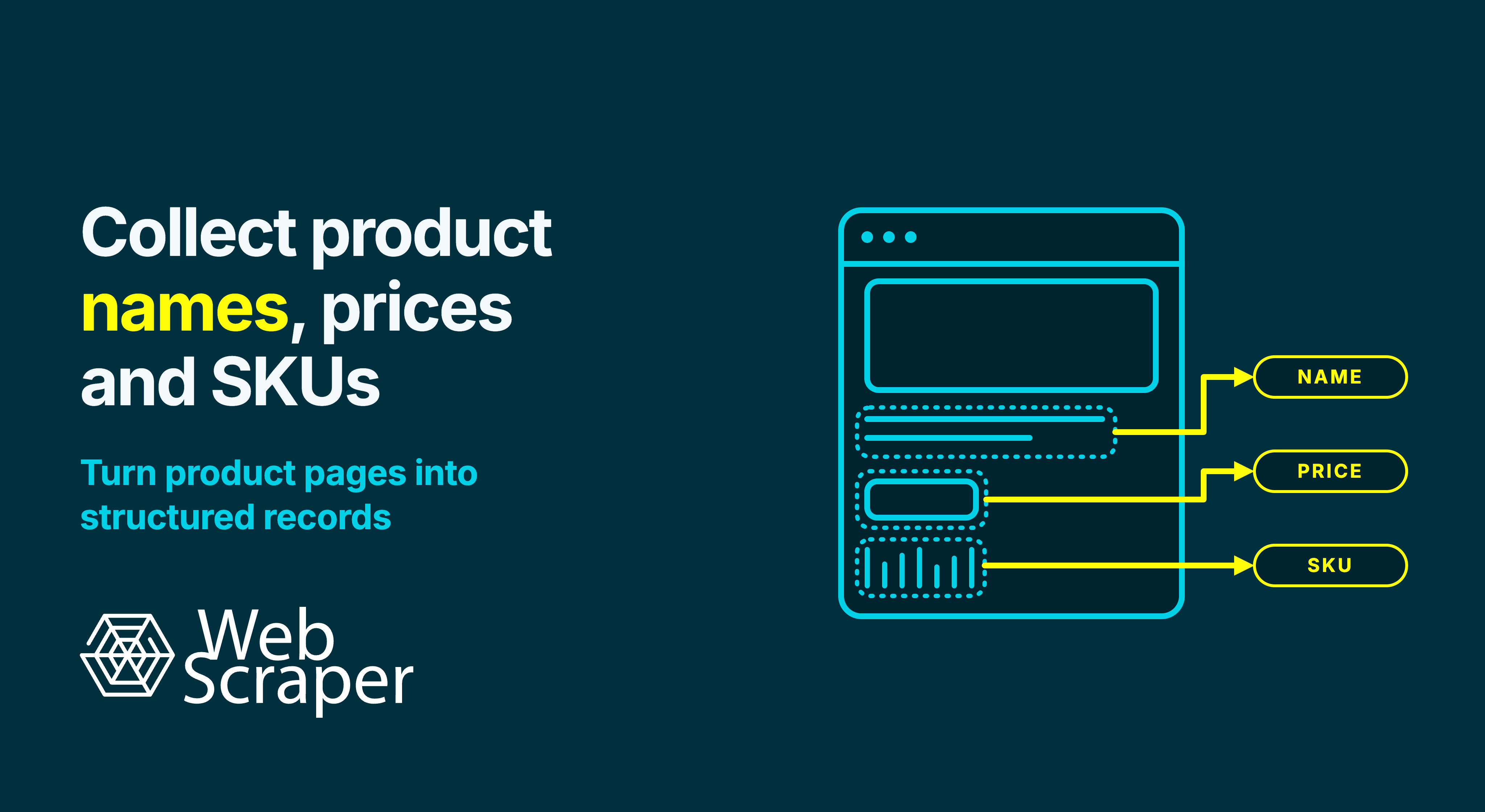
Product names and prices are often visible on category pages, while SKUs may appear only on individual product pages. Select a different size or colour, and the SKU and price may change again.

The main challenge is therefore not extracting three pieces of text. It is producing one reliable record per product or variant, with the correct name, price and SKU kept together.

This guide explains how to structure that workflow with Web Scraper, follow products from listing pages to their details, handle variants and sale prices, and validate the resulting dataset before export or automation.

Continue Reading

Web Scraper vs Octoparse: Which no-code scraper should you choose?

August 24, 2026

Web scraping platforms, web scraper, no-code scraping, Comparison
Web Scraper and Octoparse are no-code web scraping tools that can turn multi-page websites into structured datasets. Both provide automatic field detection, visual configuration, local extraction and paid cloud automation, but they organise and scale scraping workflows differently.

Octoparse is the better choice when a ready-made template already covers the exact website and fields you need, or when your team prefers a desktop application with an action-based workflow. Web Scraper is better when the job requires custom extraction logic, linked detail pages, free unrestricted local prototyping, explicit data-quality controls or a transparent path to high-volume cloud execution.

Continue Reading

Web Scraper vs Firecrawl

August 24, 2026

Data extraction tool, data extraction, web scraping tools, Web Scraper Cloud, web scraping
Web Scraper is the stronger choice for repeatable, structured datasets, offering reusable sitemaps, data-quality controls, automation and substantially lower Scale pricing. Firecrawl is better suited to arbitrary URL requests, Markdown crawling and RAG workflows.

Disclosure: This comparison is published by Web Scraper, but both products have been assessed fairly.

Continue Reading

Ethical request rates: How much scraping traffic is too much?

August 20, 2026

request rates, rate limiting, web scraping
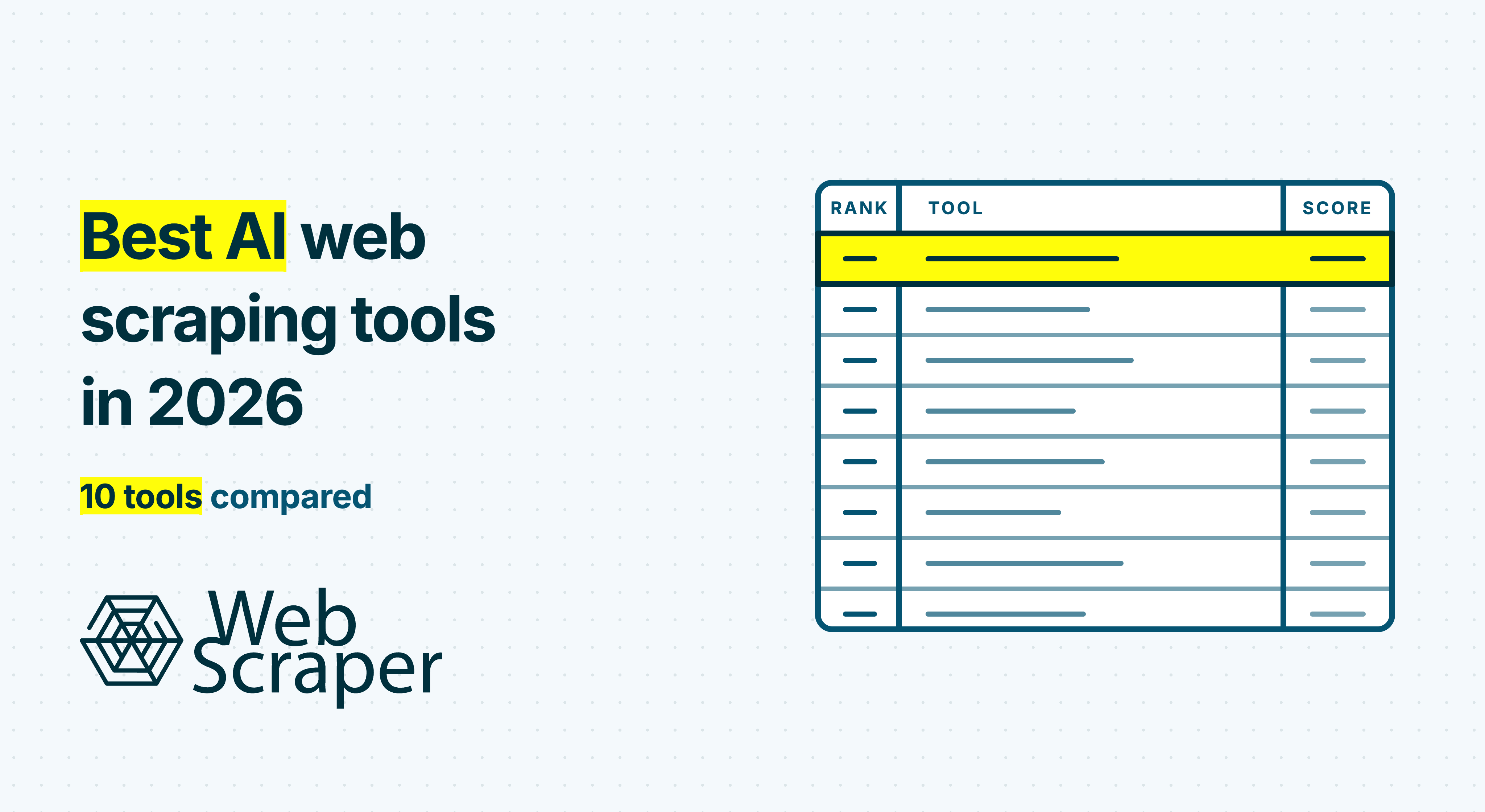
One request per second can be harmless to one website and excessive for another. A public data service may permit ten requests per second, while a small website could struggle with a short burst at a fraction of that rate.

If an ordinary public website provides no limit, a cautious starting point is one concurrent page navigation per hostname with two to five seconds between page starts. Use five to ten seconds or longer for a small, community-run or unknown-capacity site.

These are starting heuristics, not permission. Follow the lowest applicable limit from the website, an agreement, observed server behaviour or the project’s actual requirements.

Continue Reading

10 best AI web scraping tools in 2026

August 19, 2026

Web scraping platforms, web scraping tools, data extraction platforms, ai scraping platforms
AI can reduce the work required to identify fields, create extraction rules and interpret inconsistent pages. It does not make every scraper equally reliable, nor does it remove the need to handle navigation, JavaScript, blocking, validation and changing websites.

The best AI web scraping tool therefore depends on the job. This guide compares ten leading options across setup, control, dynamic-site support, repeatability, scaling, output and pricing. The aim is not to find one universal winner, but to identify the strongest option for each type of workflow.

Continue Reading

Can AI build a web scraper for you?

August 19, 2026

Web Scraper Cloud, data pipelines, web scraping

Yes. AI can build a useful first version of a web scraper. Depending on the tool and its access, it can inspect a page, identify repeated records, propose fields, generate selectors or write browser-automation code. A coding agent may also run the scraper, observe failures and revise its work.

But creating a scraper is not the same as operating a reliable data pipeline. Repeated clicks, anti-bot restrictions and large workloads still require controlled execution, access infrastructure, validation and monitoring. AI can build the draft. The harder task is proving that it returns complete, correct data at an acceptable cost.

Continue Reading

Web Scraper vs Instant Data Scraper

August 19, 2026

web scraping, browser extension, Web Scraper vs

Web Scraper and Instant Data Scraper are free browser extensions that turn website content into structured data without requiring code. They overlap on simple jobs, but they are designed for different types of work.

Instant Data Scraper is the better choice when the required data already appears as a table or repeated list and you want to export it immediately. Web Scraper is better when the job needs explicit control, linked detail pages, reusable extraction logic or a path to scheduled and scalable Cloud execution.

Continue Reading

Best web scraping test sites

August 18, 2026

Test sites, web scraping sandbox, web scraping practice websites, sites to practice web scraping, scraping test site
A scraper pointed at a load more button finishes in under a second, exits cleanly and writes six records. The category holds several hundred. Nothing errored, no request failed, and the run is marked complete.

That failure is the reason to use a practice site, and it is the thing most lists of them never mention. You get a set of URLs, a note that one holds books and another holds quotes, and no indication of which production problem each one reproduces.

These sites are not interchangeable. A static catalogue of a thousand products tests whether your selectors are correct and whether your crawler reaches the last page. It cannot tell you whether your scraper distinguishes a page that loaded from a page that contains data. The list below is ordered by diagnostic value rather than popularity, and each entry states what the site tests, what it does not, and which production failure it stands in for.

Continue Reading

Scaling web scraping from thousands to millions of pages

August 16, 2026

data pipelines, Web crawling, web scraping, Scraping architecture
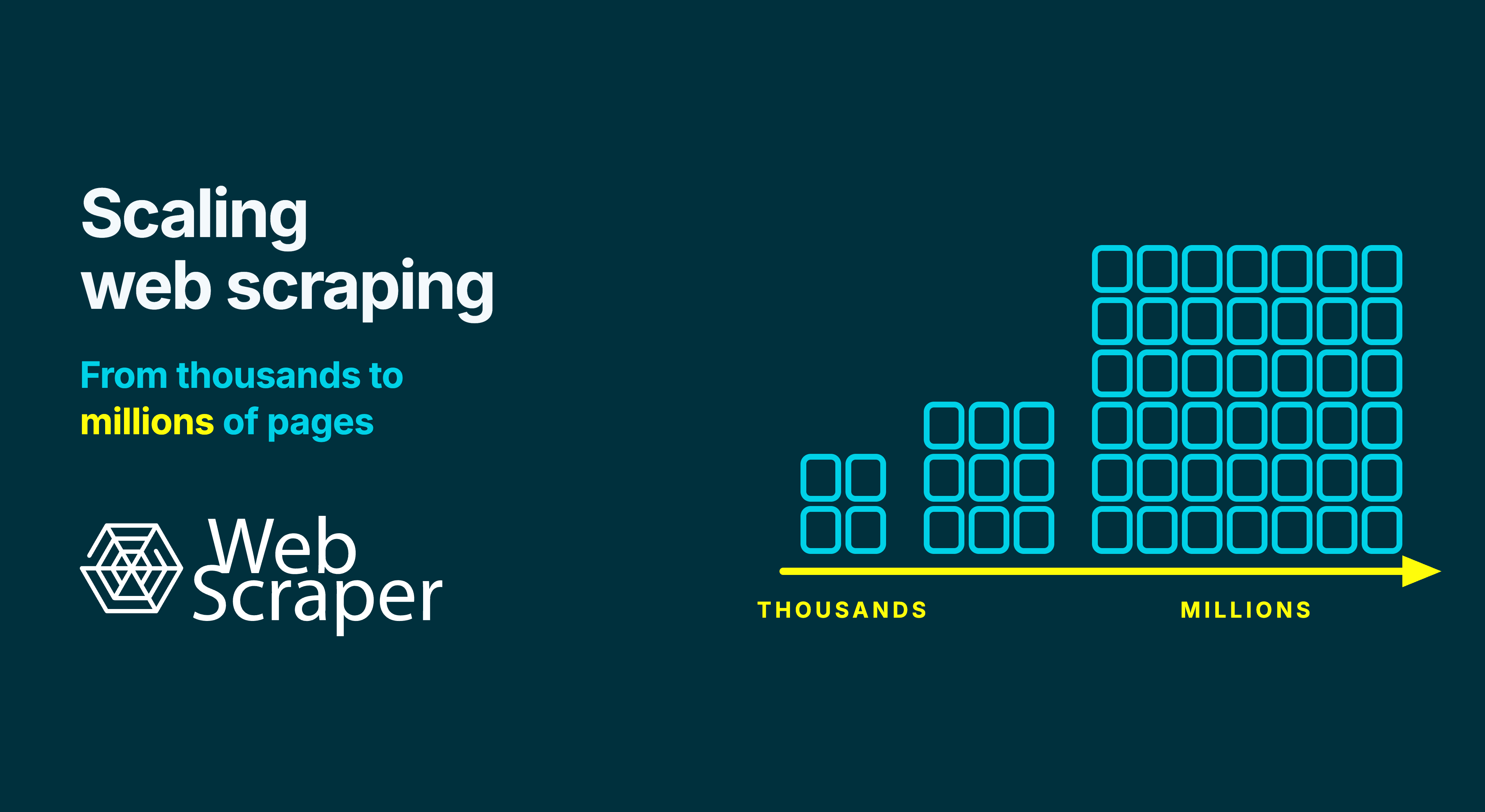
A 5 per cent duplicate rate creates 50,000 unnecessary page loads across one million targets. If 10 per cent of those targets fail and every failure receives two retries, the system can generate another 200,000 attempts without collecting a single additional page.

Continue Reading

Incremental web scraping and change detection

August 16, 2026

Web Scraper Cloud, data quality, data pipelines, web scraping, Incremental web scraping, change detection

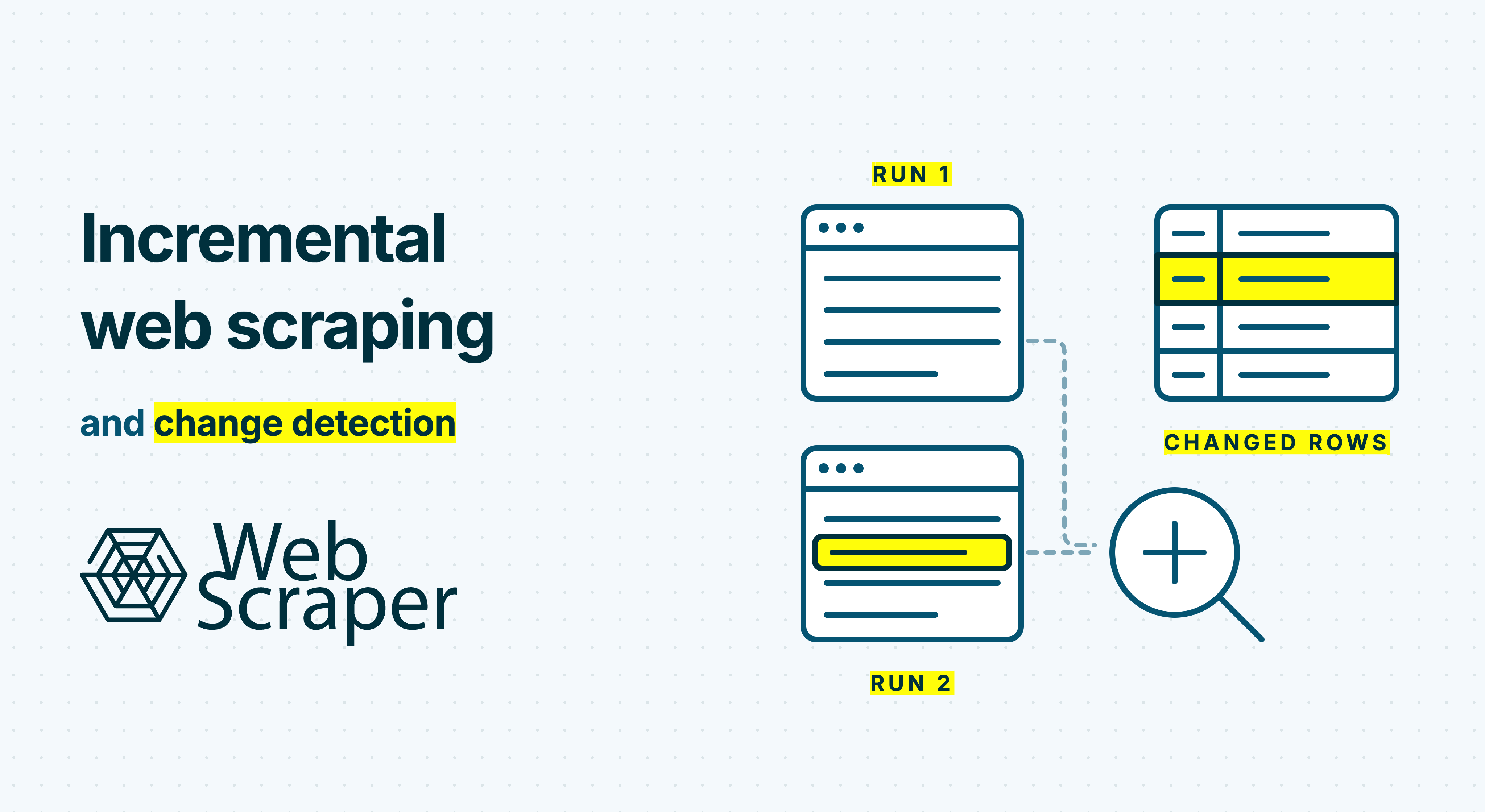
A page can change without the required data changing. The required data can change while the initial HTML remains identical. A record can disappear from one run without being deleted.

Those cases are easy to collapse into a single question: did the page change? A reliable incremental scraping system asks more precise questions. What should be revisited? Which representation contains the required data? Does the new observation differ from trusted prior state? Is that difference meaningful? Is the run reliable enough to publish an update?

Incremental web scraping is therefore a stateful synchronisation problem, not simply a scheduled scrape with a checksum attached. It uses state from earlier runs to reduce unnecessary collection and apply only validated record changes downstream.

Continue Reading

i18n
How Web Scraper was translated into 50 languages with AI

August 13, 2026

i18n

Originally, the Web Scraper extension was only available in English. English is only the third most spoken native language in the world, with 372 million native speakers, while Spanish has 487 million and Chinese has 988 million. To improve usability and reduce misuse, we decided to internationalize the Web Scraper extension. The initial plan was to use a SaaS, but in the end, everything was translated by AI.

Continue Reading