Blog

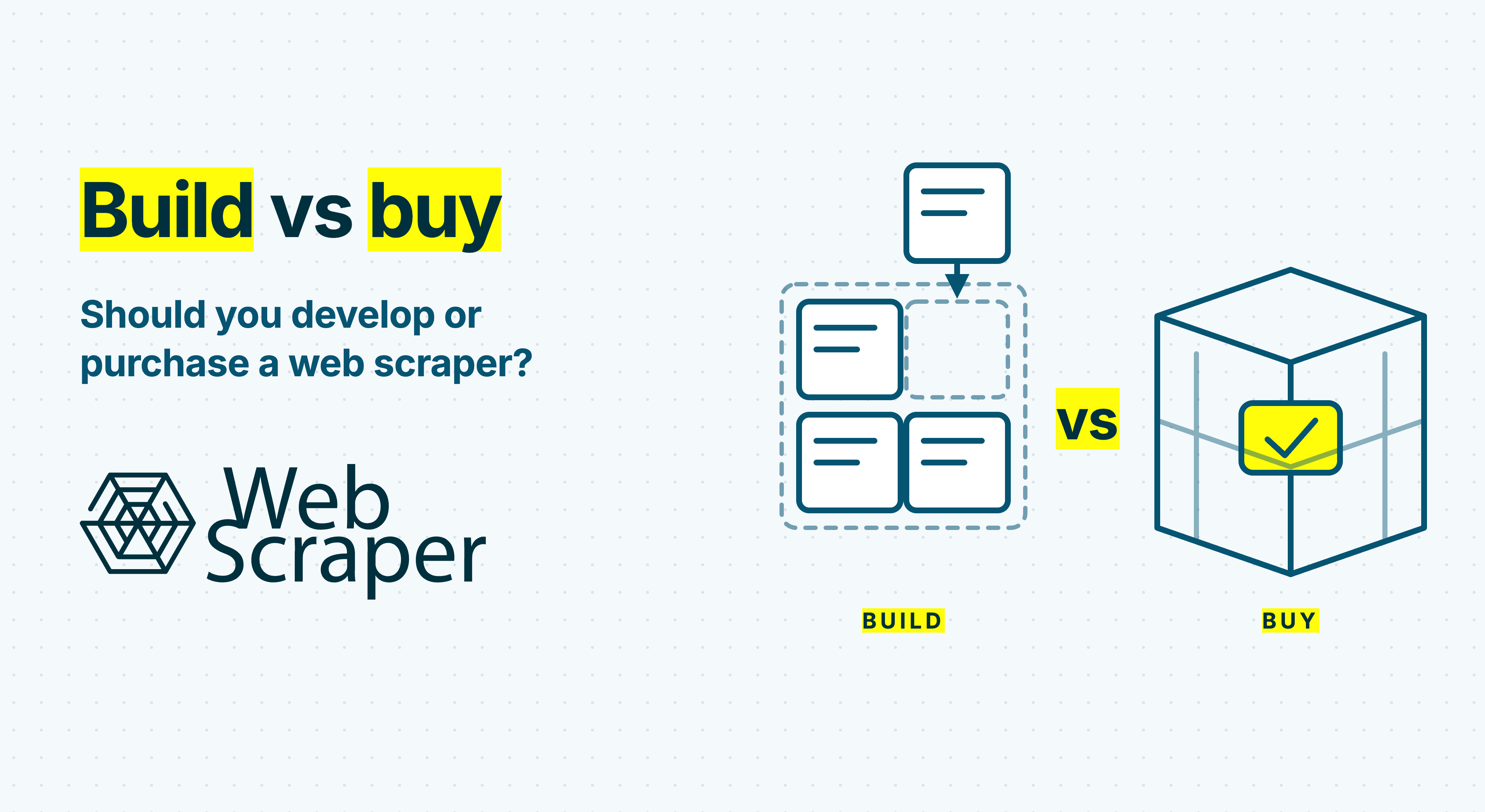
Build vs buy: Should you develop or purchase a web scraper?

August 13, 2026

Web scraping platforms, Web scraper development, Web Scraper Cloud, Scraping infrastructure, Build vs buy
A developer can write a scraper that collects a product name and price in an afternoon. That does not mean the company has a production web data pipeline.

The difference appears when the scraper must run every morning, cover thousands of pages, reproduce the correct country or website state, recover from failures and deliver a dataset that other systems can trust. At that point, the build-versus-buy question is no longer about whether your team can extract data from HTML. It is about which parts of the collection system your organisation wants to own.

Continue Reading

Proxy management for web scraping: what actually matters

August 12, 2026

web scraping, residential proxies, Proxy management, proxy rotation, browser sessions
A scraper can have access to thousands of proxy IP addresses and still collect the wrong page, lose a stateful session or waste most of its budget on retries. The size of the proxy pool is rarely the main issue.

Proxy management is the process of coordinating network routes with session state, request rate, retries, geography and validation for each target website. Rotation is part of that process, but it is not the whole process.

The practical goal is not to make every request return 200 OK. It is to receive the expected page, extract valid records and complete the job at the required freshness and cost. That distinction changes how proxies should be selected, rotated and monitored.

Continue Reading

Scraping libraries vs web scraping platforms

August 11, 2026

web scraping infrastructure, Web Scraper Cloud, browser automation, Data engineering
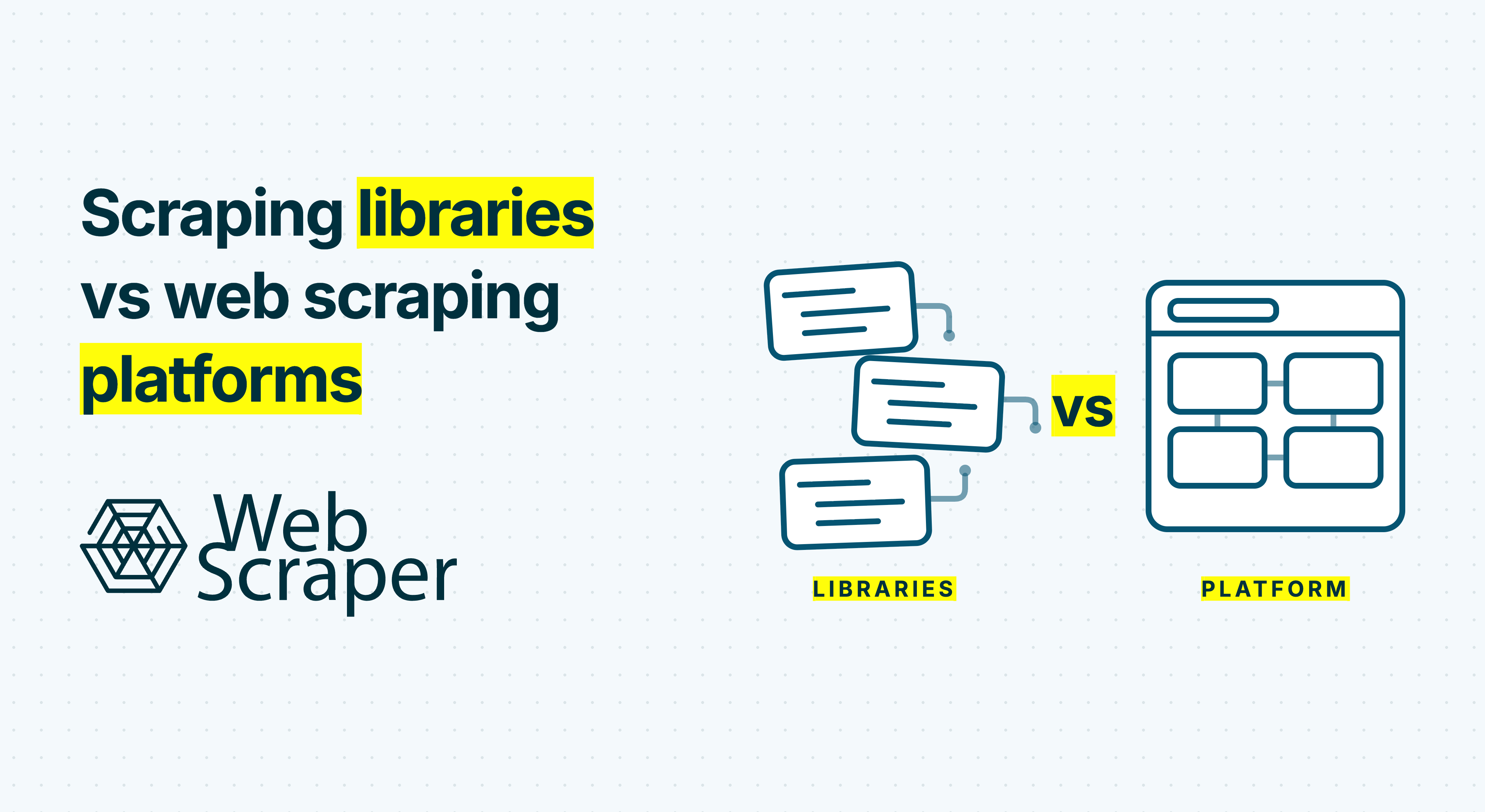
A scraper can begin with three steps: request a page, parse its HTML and select a value. That may be the whole job once. When it must run every morning, process hundreds of thousands of URLs and deliver a validated dataset, extraction becomes only one part of a production system.

Libraries and platforms are often presented as code versus no-code. That is too simplistic. Libraries may handle HTTP, parsing or browser automation, while platforms can use visual builders, APIs or hosted code. The real choice is which parts of the operating stack your team wants to own.

Continue Reading

Empty pages, consent screens and bot challenges: telling them apart

August 10, 2026

Empty scraping results, web scraping troubleshooting, consent screen web scraping, empty page web scraping, bot challenge detection
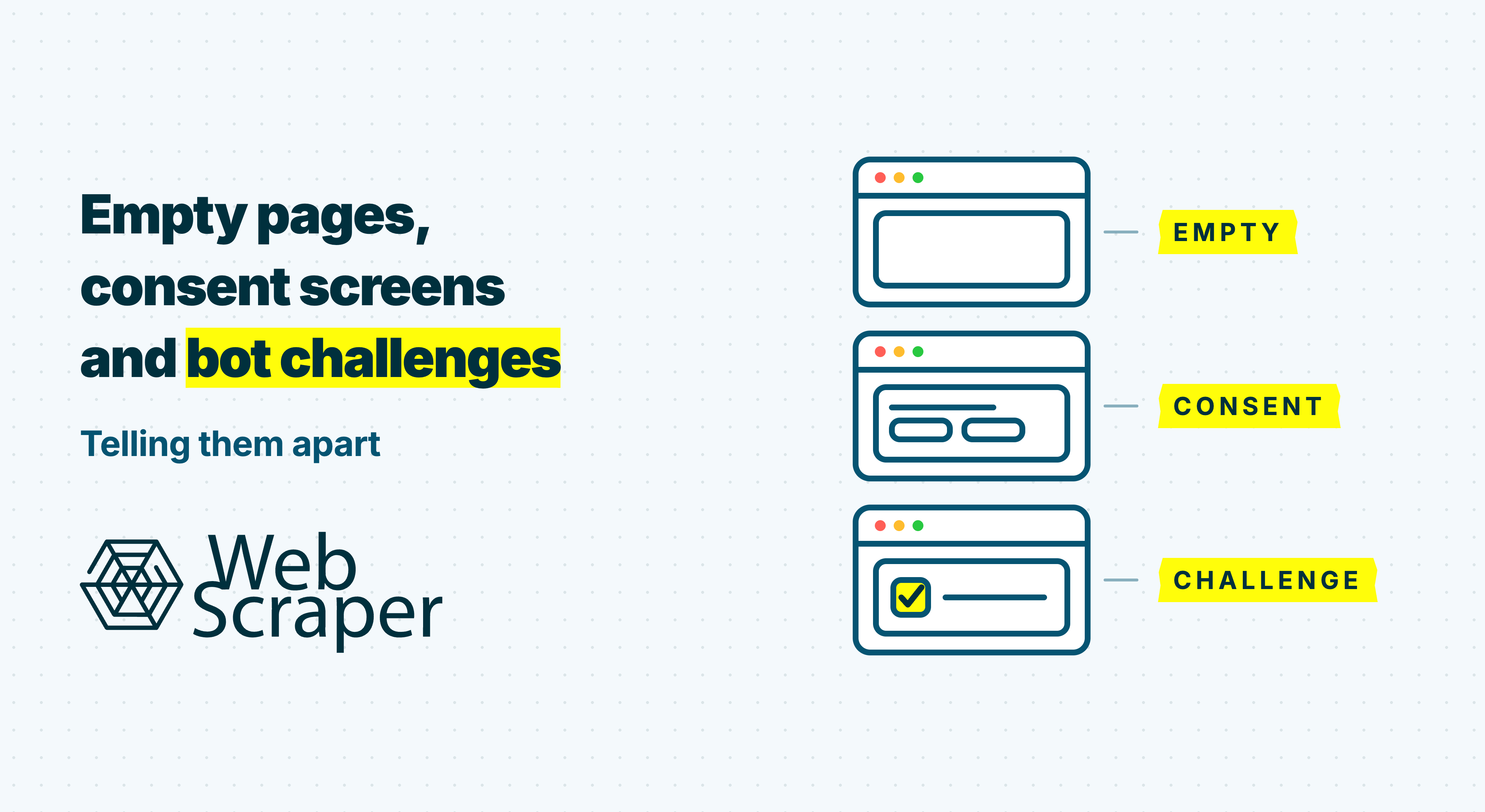
An empty scraping result does not necessarily mean that the browser received an empty page. The requested page may legitimately contain no records, the expected content may still be loading, a consent state may withhold it, a bot challenge may have replaced it or the configured selectors may not match it. In Web Scraper Cloud, an empty page means that the page loaded successfully but the configured selectors extracted no data.

In short: Similar screenshots can require entirely different fixes. Check the response, the rendered page and one controlled transition. The decisive question is not what the screenshot resembles, but what evidence explains the missing data.

Continue Reading

8 best web scraping browser extensions in 2026

August 10, 2026

data extraction, Firefox extension, no-code scraping, web scraping, Chrome extension, browser extension
A web scraping browser extension can turn a page you are already viewing into a structured dataset without requiring Python, a command line or a separate desktop application.

Some extensions capture a clean table in one click. Others build reusable, multi-level workflows or configure scrapers that later run in the cloud. The right choice depends on whether you need speed, control, reusability or unattended execution.

Continue Reading

Web crawling vs web scraping vs data extraction

August 09, 2026

data extraction, data pipelines, web crawler, web data, scraping workflows, Data collection
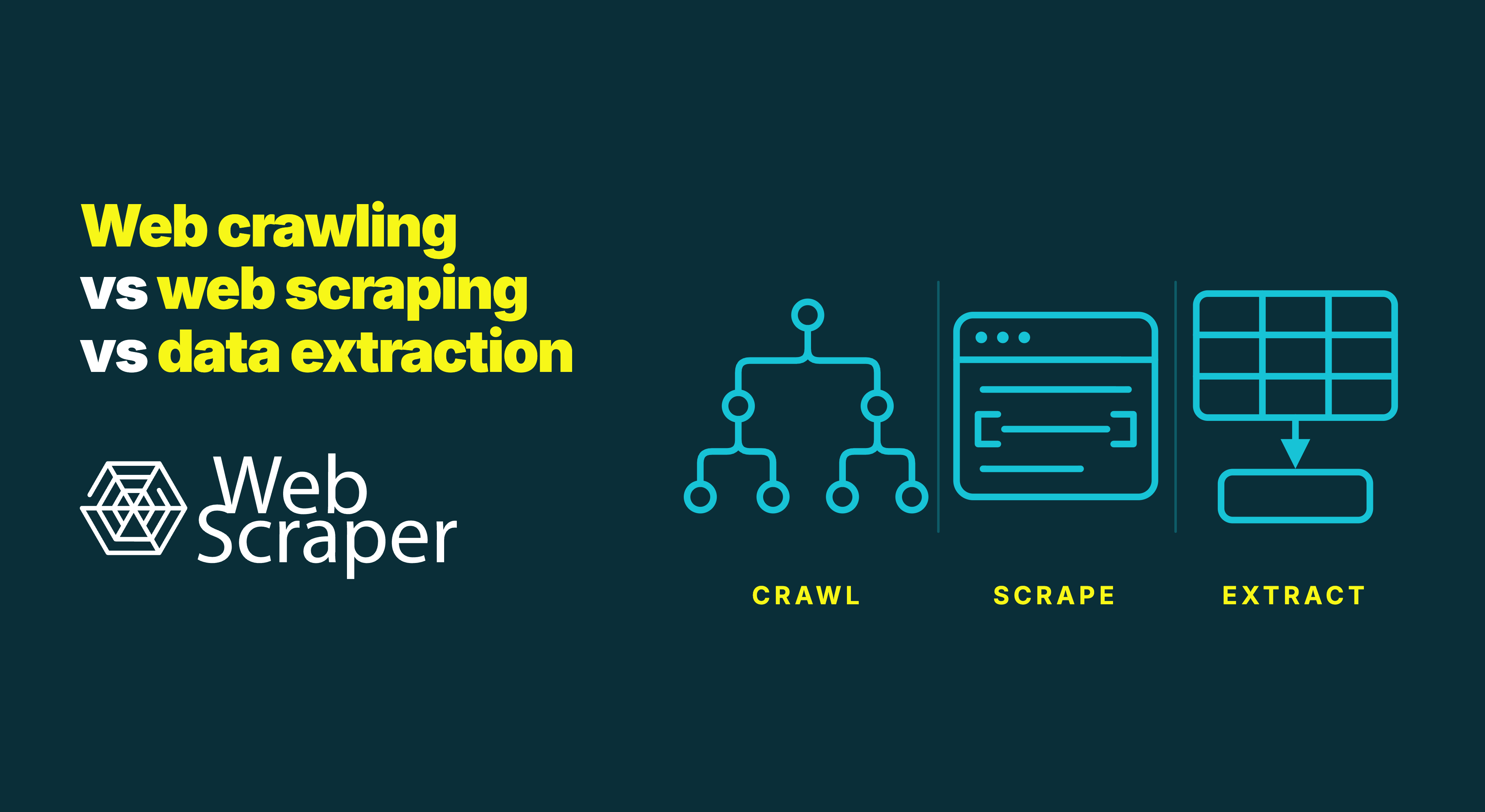
Web crawling discovers and schedules pages. Web scraping collects content or data from websites. Data extraction selects the required values from a source and maps them into fields or records.

The boundaries are useful, but the terms are not three universally standardised steps. In practice, web scraping often names the complete workflow, including discovery, retrieval, browser interactions and extraction.

The distinction matters when something goes wrong. A project can reach every intended URL but extract the wrong price. It can also extract perfect records from only 60 per cent of the intended pages. Both jobs may report that they finished, but they have different failures.

Continue Reading

How JavaScript-rendered content affects web scraping

August 08, 2026

headless browsers, lazy loading, Web Scraper Cloud, browser automation, JavaScript, client-side rendering, infinite scroll, dynamic content
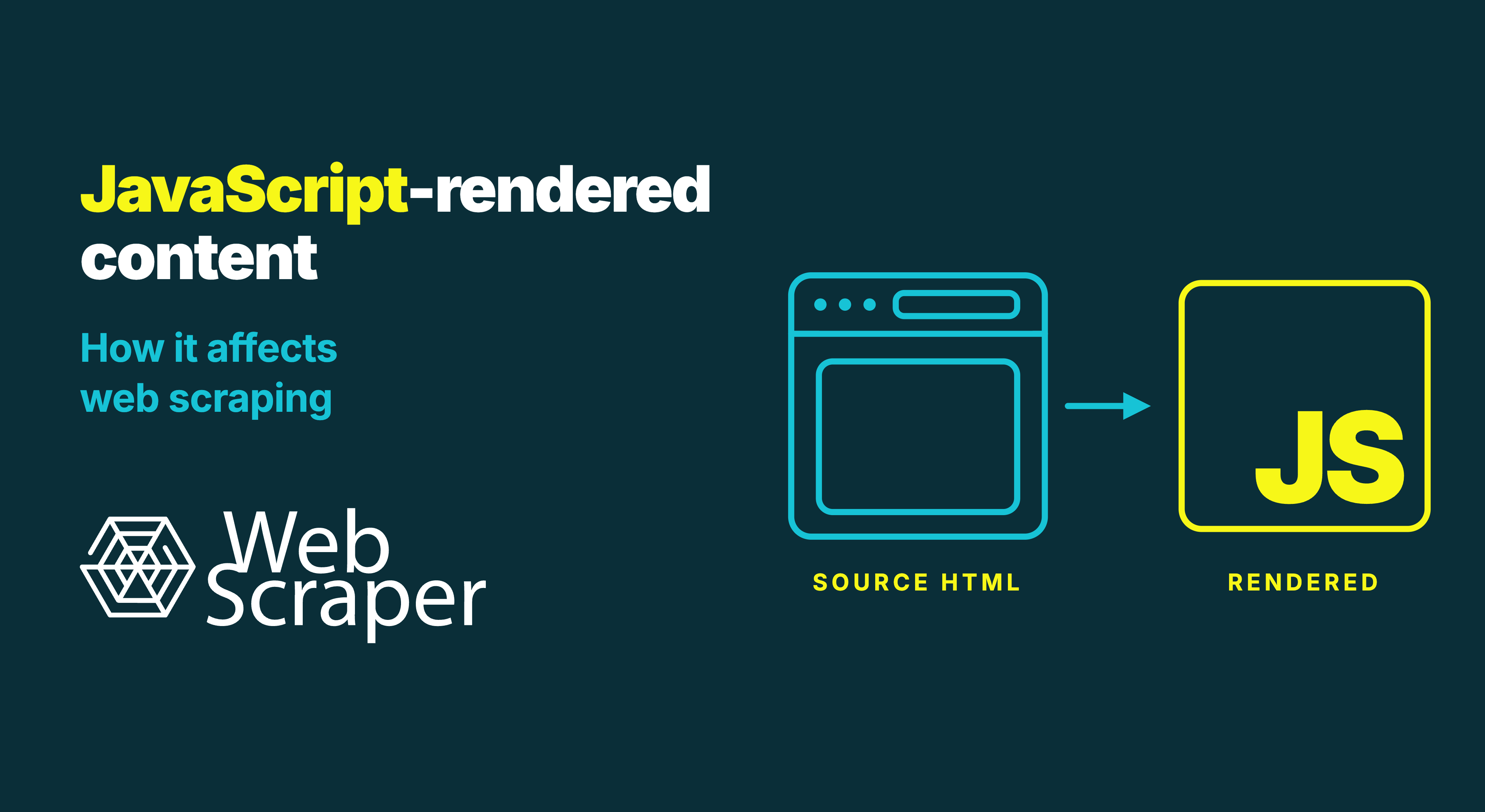
A product price is visible in your browser. The page loads normally, the product is in stock and the value is clearly displayed. Yet a scraper requests the same URL and returns an empty price field - or no product record at all.

The scraper may not be looking at the same version of the page.

A website can return an initial HTML document, execute JavaScript, request more data and update the page without another full navigation. It may then change the data again when someone scrolls, clicks a button, selects a variation or opens a tab.

JavaScript-rendered content therefore affects more than page-loading time. It changes where the required data exists, when it becomes available and which actions are needed to produce it. Reliable JavaScript web scraping depends on reaching the correct page state, not simply enabling JavaScript and waiting for the page to “load”.

Continue Reading

Web Scraping vs AI Scraping: Which should you use?

August 05, 2026

data extraction, Web scraping automation, AI scraping, agentic scraping, web scraping, rule-based scraping, LLM data extraction
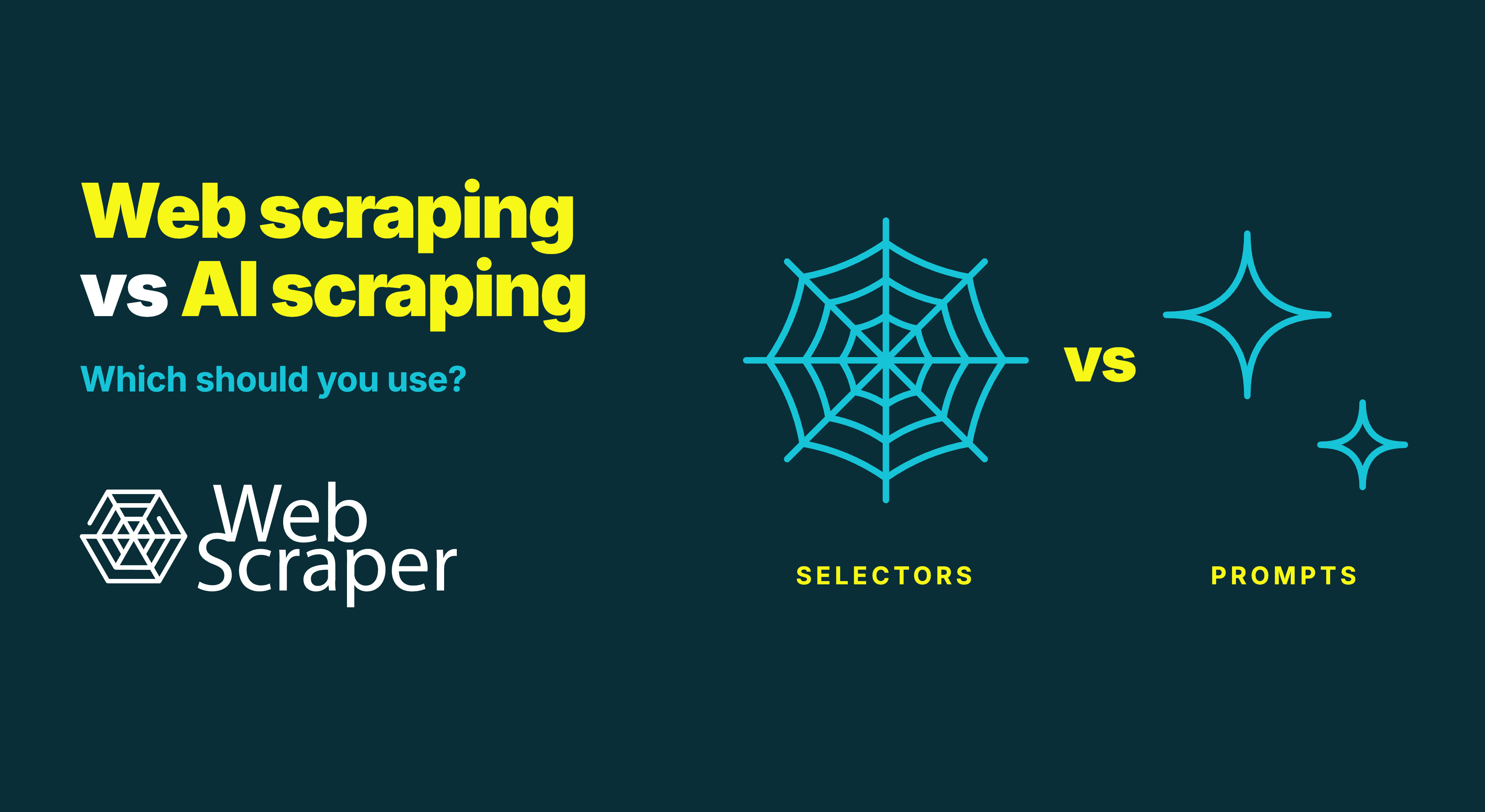
AI scraping promises a simple workflow: describe the data you want, provide a website and let a model work out the rest. Rule-based scraping is less glamorous, but it gives you explicit navigation and extraction logic that can be inspected and repeated.

The useful choice is not old automation versus intelligent automation. Use rule-based scraping for stable, repeated collection where exact output matters; use AI scraping when layouts, meaning or discovery paths vary; and combine them when production reliability and flexibility are both required.

Continue Reading

Why websites block scrapers

August 04, 2026

Anti-bot, bot detection, rate limiting, Proxies, web scraping
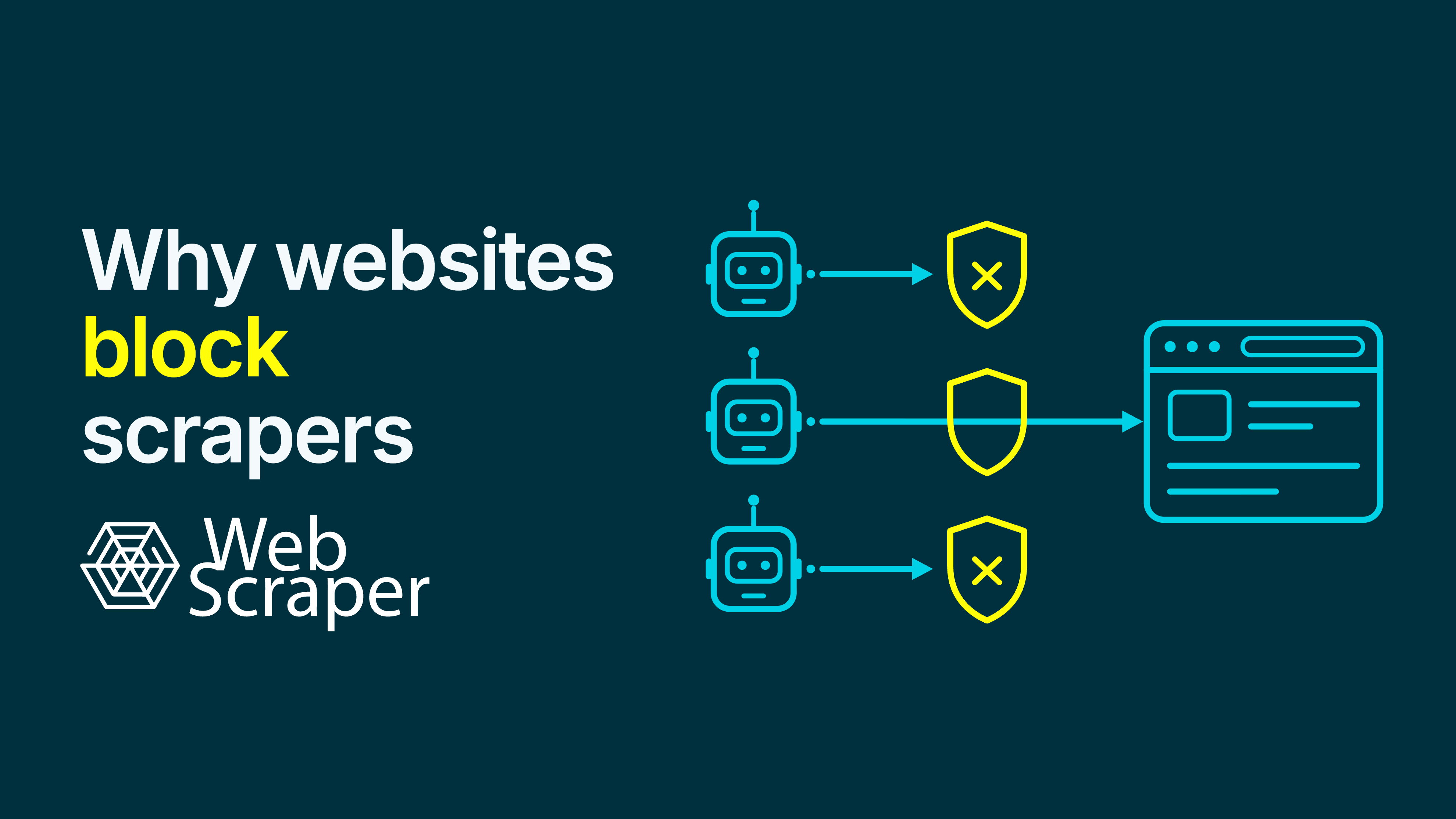
A scraper can receive the same page as a browser—until the website decides it is not the same kind of visitor. That decision is rarely based on one missing header or an obviously robotic request rate. Modern bot systems combine network reputation, HTTP and TLS characteristics, browser signals, session history, behaviour, and the page being requested.

The result is a risk decision. A site may allow a verified crawler, throttle a collector, challenge checkout, and block the same session at volume. It cannot see the project behind a request—only requests, patterns, and risk signals. A block is an outcome, not a diagnosis.

Continue Reading

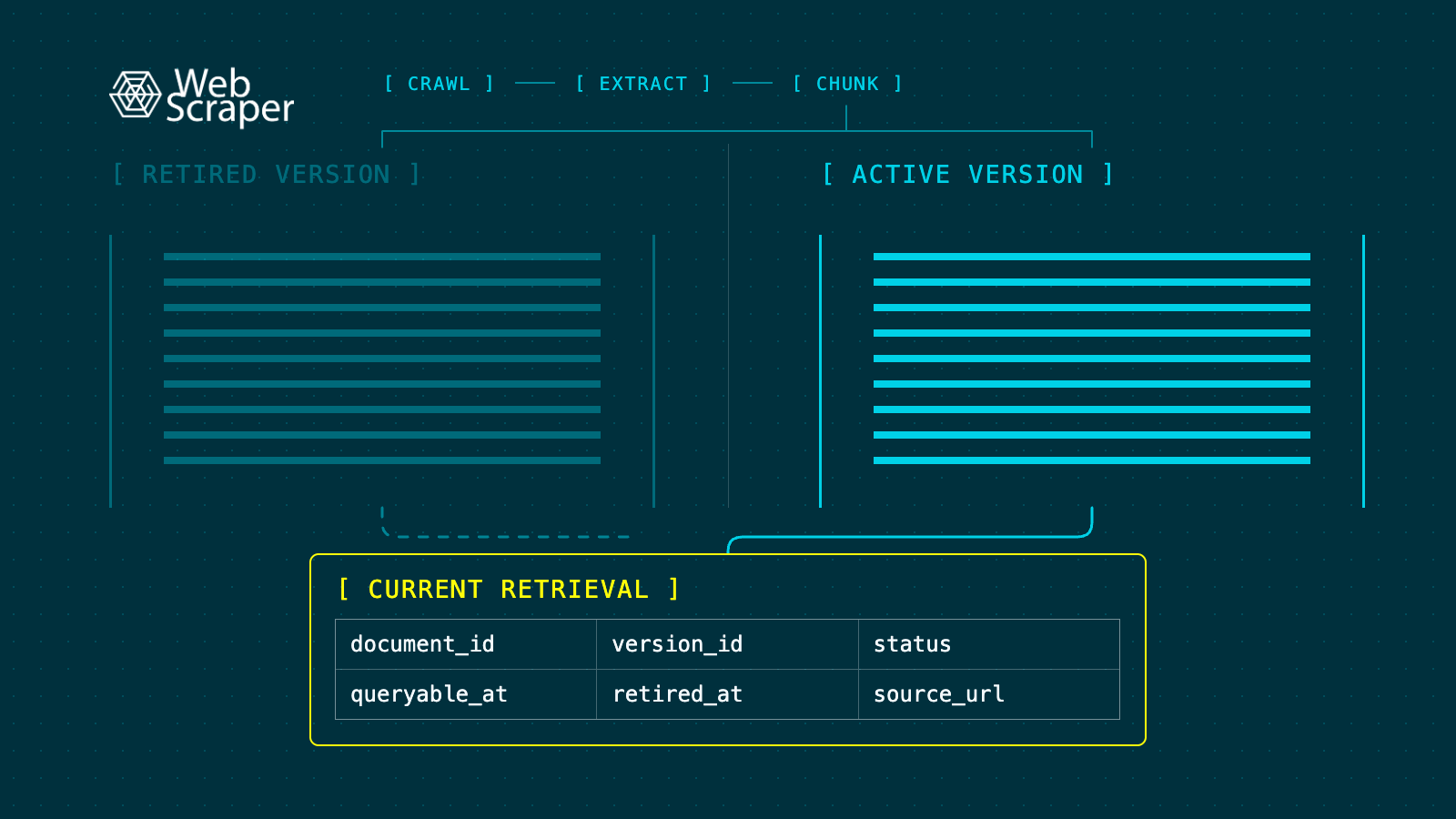
A staged web-to-RAG pipeline showing validated source updates replacing obsolete chunks before retrieval.
Building a fresh web data pipeline for RAG

August 04, 2026

vector databases, data pipelines, web data, AI, RAG
Fresh RAG depends less on how often a crawler runs than on whether a source change reaches retrieval correctly. A pipeline can finish every hour and still serve an old answer if it misses rendered content or leaves superseded chunks active.

The practical design is a version-aware chain: discover, collect, preserve, normalise, validate and publish the right document state. This guide shows how to build that chain and where Web Scraper Cloud fits as the collection layer.

Continue Reading

Datacenter vs residential proxies for web scraping

August 04, 2026

web scraping reliability, data quality, Proxy management
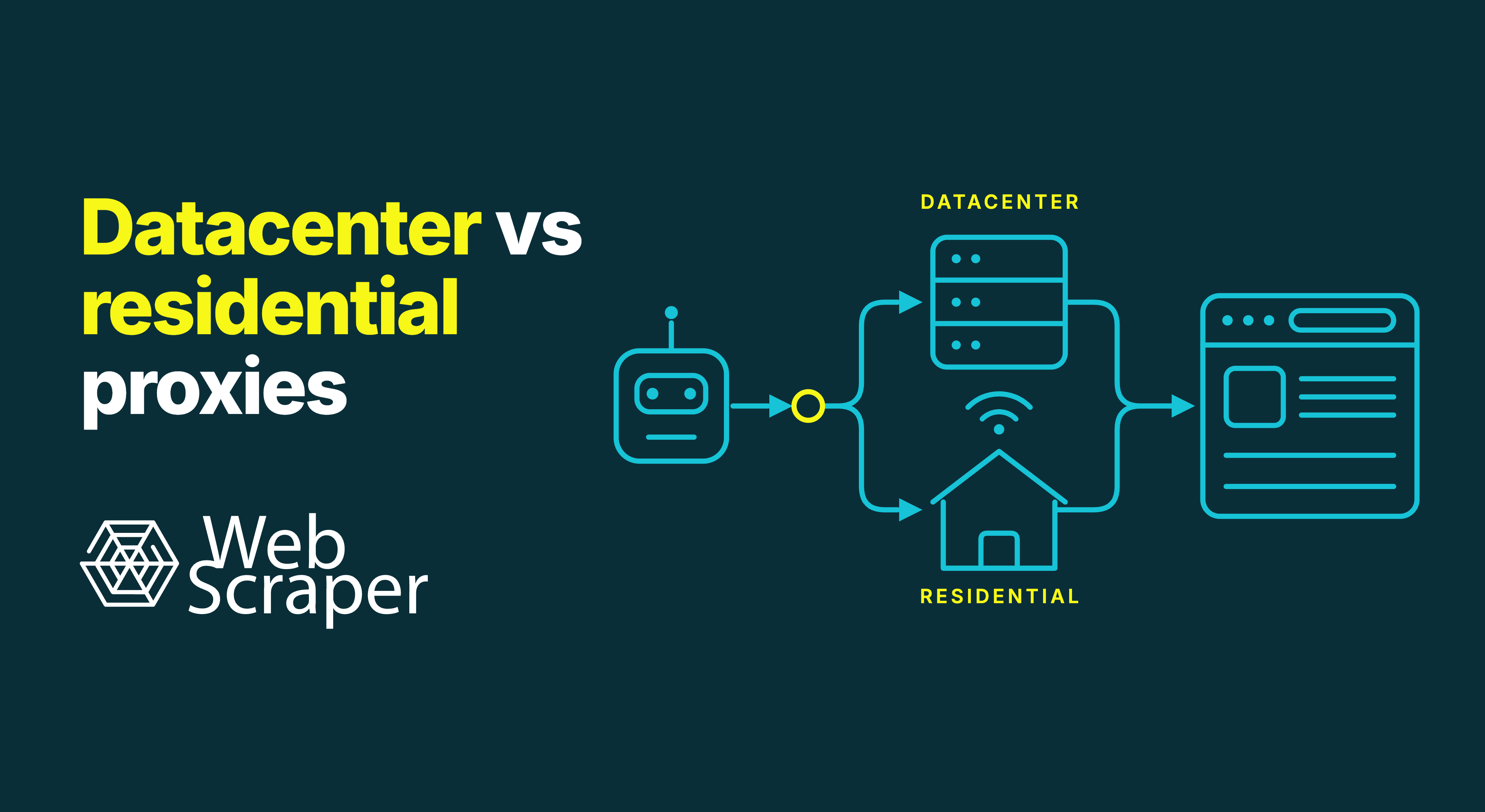
Start with datacenter proxies. Move to residential proxies when controlled testing shows that network classification, IP reputation or location is preventing you from collecting the right pages reliably. Datacenter proxies are generally faster, cheaper and easier to scale, while residential proxies offer broader location coverage at a higher and more variable cost.

The important test is not whether a proxy returns 200 OK. It is whether the scraper receives the expected page and produces valid records at an acceptable total cost. For many production workloads, the best setup is datacenter by default and residential where the evidence justifies it.

Continue Reading

200 OK but no data: Diagnosing incorrect page responses

August 04, 2026

Data validation, Empty scraping results, 200 OK, JavaScript rendering, Soft blocks
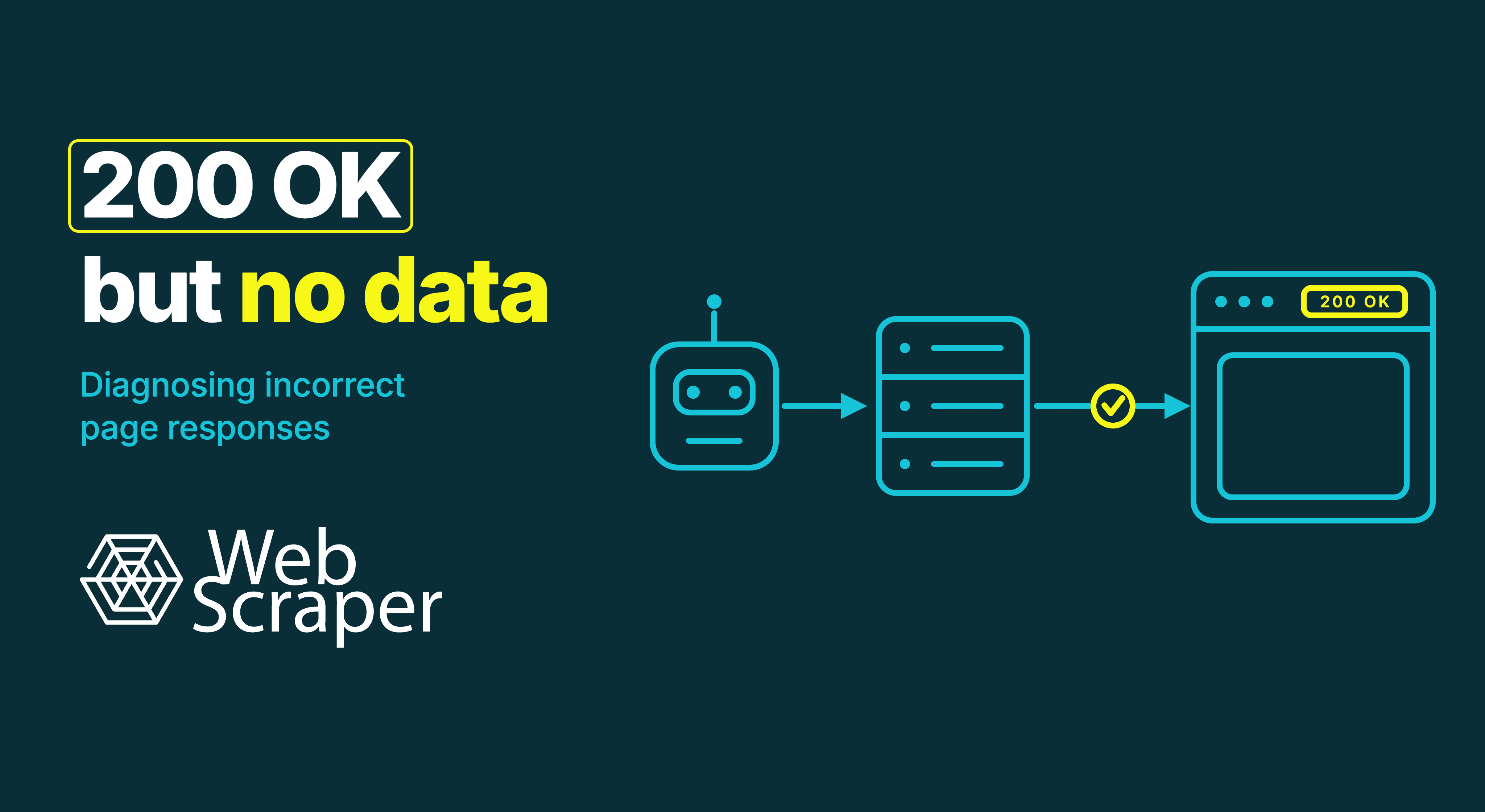
A scraping job can report that every page loaded successfully and still produce an unusable dataset. The requests returned 200 OK, yet prices are missing, listing pages contain no records or every URL produced the same browser-check message.

200 OK confirms HTTP-level success, not that the intended page arrived, JavaScript rendered the expected content or selectors extracted useful values. Identify the first failed layer, preserve the failing response and change one variable at a time.

Continue Reading

Illustration comparing a structured API response with web scraping, showing both methods producing a consistent product dataset.
Web scraping vs API: Which data collection method should you use?

August 03, 2026

Web Scraper Cloud, Data collection, API
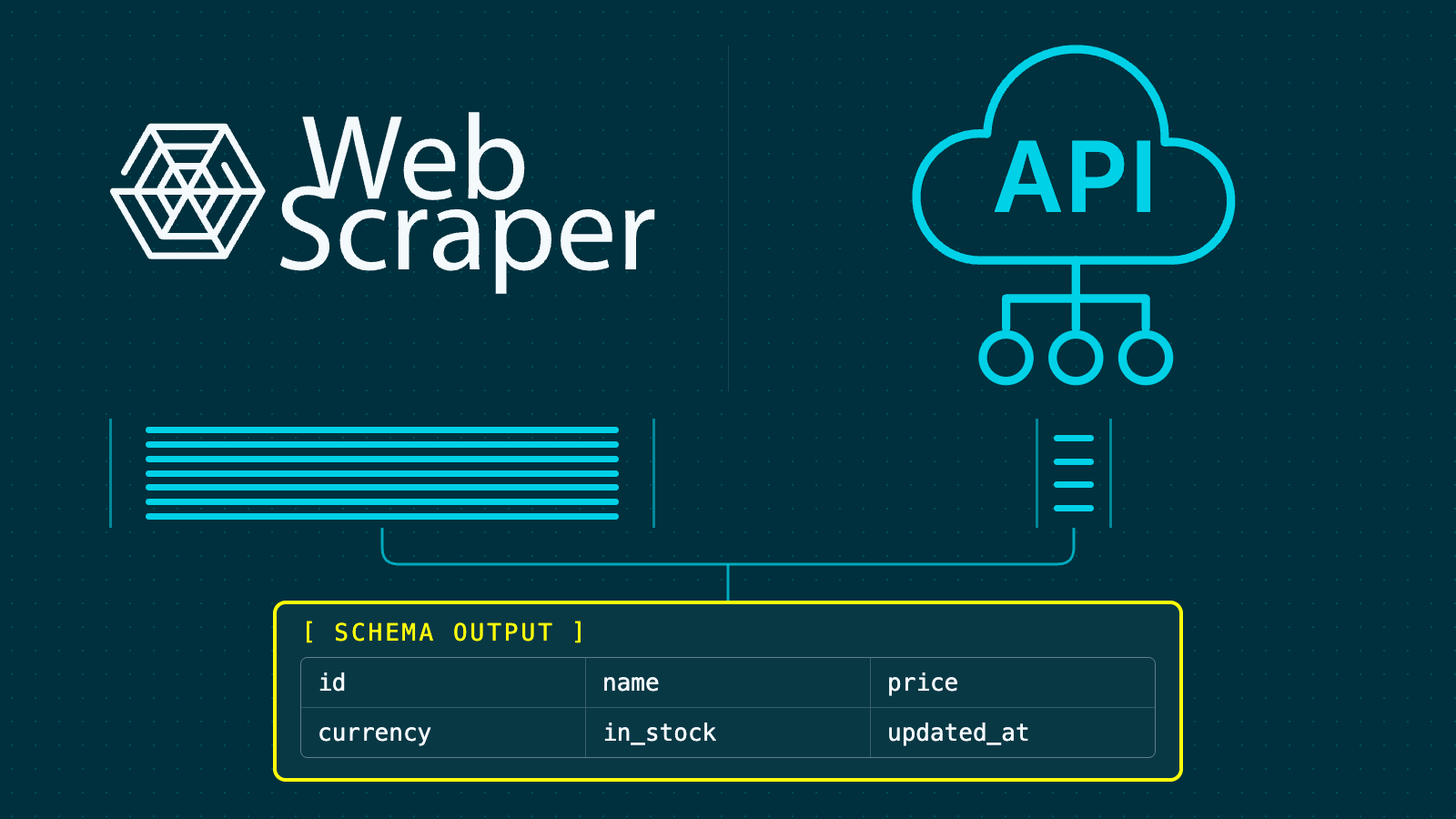
APIs and web scraping solve a similar problem: getting data from one system into another. An API provides a defined way to request data from a service, while web scraping collects data from the pages a website presents to its users.

When a suitable official API exists, it is usually the cleaner route. The important word is suitable: many APIs omit required data, restrict access or impose limits that do not fit the project. The practical choice may therefore be an API, web scraping or a combination of both.

Continue Reading

Web Scraper 1.111.13 release

July 20, 2026

We are happy to announce that Web Scraper 1.111.13 has been released. This update introduces several improvements to the AI Wizard, enhances CSS selector generation for pagination, expands language support, and includes fixes for element selection within shadow roots.
Continue Reading

Web Scraping HTTP3
HTTP3 - the next big challenge for web scraping

July 08, 2026

Anti-bot, Proxies, HTTP/3

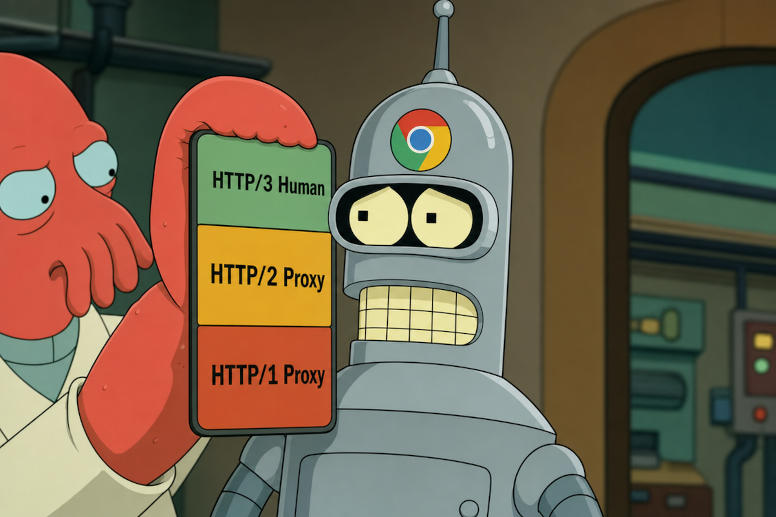
Practically all modern browsers support HTTP/3, and all of the biggest CDN providers have enabled HTTP/3 support as of 2022. However, only 34.7% of top 1000 websites (CloudFlare’s top domains 2026-05 list manually verified) support HTTP/3, but website support is growing year by year. Even though HTTP/3 over QUIC is a fundamental web content delivery change, the adoption is meaningful, and HTTP/3 is propagating everywhere. 


Proxies are a major part of web scraping as they allow for more anonymity, privacy and access to sites that may be protected in various ways like geo-blocking and client fingerprinting. The biggest proxy vendors support proxying web traffic via HTTP or (sometimes) SOCKS5 proxies, but this support is largely limited to TCP, while HTTP/3 over QUIC is delivered over UDP. Some SOCKS5 proxies might support HTTP/3 by allowing proxying of UDP traffic, but since browsers do not support the configuration of UDP proxies, there is no easy way to proxy HTTP/3 traffic.

Continue Reading